





















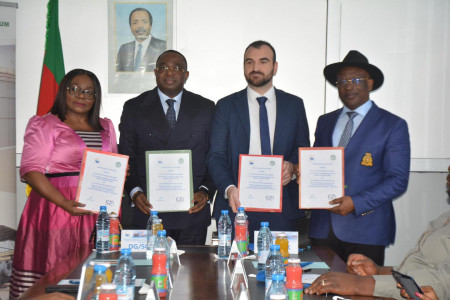
The Port Authority of Kribi (PAK) has signed a 12-month protocol agreement to develop a Hydrocarbons Terminal. The accord, inked on 18 December 2025, brings together PAK, the Cameroon Petroleum Storage Company (SCDP), and the Consortium PARLYM/EJN. It lays the groundwork for a facility designed to reshape the nation’s energy logistics.
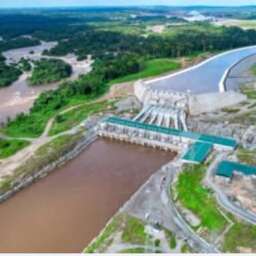
According to PAK, the agreement marks a key move towards the development of an integrated deep-water petroleum infrastructure at the Cameroonian port, which is expected to reshape national energy logistics and supply chains. The planned Kribi Hydrocarbons Terminal will feature a deep-water oil quay, large-capacity storage tanks, and an interconnected pipeline network designed to support larger vessels, streamline supply routes, and reduce logistical costs. The infrastructure is intended to secure hydrocarbon flows, enhance the reliability of national energy supplies, and bolster strategic reserve capacity against global market fluctuations.
The protocol, which runs for 12 months, will consolidate technical concepts ahead of investment decisions and underpins the port’s strategic mission to develop large-scale infrastructure that supports Cameroon’s broader economic growth.
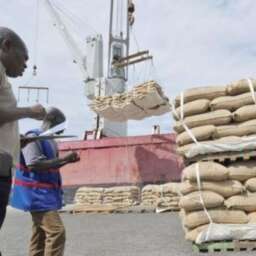
Recent economic indicators illustrate the port’s expanding role in the national economy. In 2024, the Port Authority of Kribi reported handling 12.7 million tonnes of cargo, up from 10.7 million tonnes in 2023, reflecting a significant year-on-year increase in traffic. This rise contributed to a 24 per cent jump in revenue to FCFA35.3 billion for the year, compared with FCFA27 billion in the prior period, and to a net profit of FCFA3.4 billion.
The port has also expanded its container handling capacity. On 9 May 2025, PAK inaugurated a second container terminal, boosting its annual container-handling capacity from 300,000 twenty-foot equivalent units (TEUs) to more than 1 million TEUs. This expansion, which has already attracted major shipping lines such as MSC’s Africa Express route, is anticipated to drive further growth in cargo volumes and associated revenue streams.
Customs revenue linked to the port’s operations has grown in parallel. Since the deep-water port’s opening in March 2018, customs collections have surged to nearly FCFA1.2 trillion, placing Kribi as the second largest contributor to national customs revenue after Douala.
Further figures from the Ministry of Finance show that Cameroon’s customs revenue surged by 29% in the first quarter of 2025, reaching 265.3 billion CFA francs, compared with 205.7 billion CFA francs in the same period of 2024. The increase was attributed to more vigorous port activity in Douala and Kribi, with import duties, VAT, excise, and export duties all registering growth.
The combination of increased throughput, expanded container capacity, and strategic infrastructure planning underpins the economic momentum at Kribi. The addition of a hydrocarbon terminal project signals both diversification and deepening of the port’s economic impact, reinforcing its role as a central logistics and energy hub for Cameroon and the wider Central African region.
Mercy Fosoh

