
















Cameroon, the Republic of the Congo and the Central African Republic have secured $394.83 million (about 224.06 billion CFA francs) in new financing from the World Bank Group to develop sustainable forest economies under the Congo Basin Forest Economic Programme (SCBFEP), according to a statement issued on April 1 by the Bretton Woods institution.
The package, approved for Phase I, is designed to improve forest management, strengthen timber value chains and generate an estimated 220,000 jobs across the three countries. It is structured through the International Development Association (IDA) and forms part of a wider $1.02 billion programme targeting the economic and climate potential of the Congo Basin, the world’s second-largest tropical forest biome. Cameroon is allocated $193.83 million, the Republic of the Congo $120 million, while the Central African Republic will receive a $60 million grant. Regional institutions, including the Economic and Monetary Community of Central Africa (CEMAC) and the Central African Forest Commission (COMIFAC), will each receive $4 million to support coordination and implementation.
According to the bank’s statement, the programme targets both supply-side and market-side constraints in the forestry sector. It will place nearly eight million hectares under sustainable management, while increasing the share of legally processed timber by 15%. In parallel, more than 500 small and medium-sized enterprises are expected to benefit from improved access to finance, training and value-chain infrastructure, alongside 20,000 individuals, of whom 40% are women. The statement adds that the initiative also includes support for agroforestry systems and community-based forestry enterprises, with over 7,000 young people set to be encouraged into entrepreneurship.
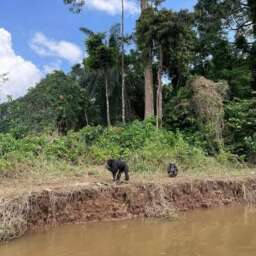
The World Bank said the investment is structured to move beyond conservation-only models by creating economic conditions that make sustainable forest management viable at scale. It integrates climate and livelihoods objectives, with an expected reduction of 17.6 million tonnes of CO₂ equivalent in annual emissions. Marginalised communities, indigenous populations and forest-dependent groups are central to programme delivery.
The Phase I rollout is positioned as a catalyst for broader structural change in Central Africa’s forest economies.
“This new program marks a milestone for the Congo Basin, where sustainable forest economies create jobs, raise incomes, and strengthen resilience for millions of people,” said Chakib Jenane, World Bank Regional Director for Planet. “By scaling legal wood production, improving governance, and investing in skills and enterprise growth, countries can unlock inclusive and sustainable prosperity.”
According to the World Bank, the initiative aligns with the Global Challenge Program on Forests for Development, Climate, and Biodiversity, while supporting participating countries’ national development strategies, regional commitments and climate objectives.
Mercy Fosoh

