

























For over two centuries, the idea and meaning of the nation-state has informed the organization of people in political entities, shaping policies, war ventures, and expectations. It is difficult to exclude the state when talking about trade, governance, labor, the market, etc. Various forms of nationalisms emboldened by the idea and reality of the state have contributed to conflicts, death, and violence, often with the intention of keeping the state intact. However, there is a growing shift, starting mostly in the second half of the 20th century, to create alliances between states who realize the benefits of cooperation over belligerence. Arguments in this article are in line with African states cooperating, with emphasis on issues of power and influence, the need for African countries to empower themselves through ceding authority to African supranational institutions, and for Africa to act promptly in response to the ongoing global power reconfiguration. First, how does power look like, seen from Donald Trump’s recent erratic trade policies?
- Power and Influence
Under President Trump, America is looking inwards (America first), Europe is struggling to adjust its power axis, with the far right political movements quickly gaining grounds. China is reticent and lying low, as usual. This scenario presents Africa the opportunity to reassess its power in the world, with a clear intention to stand out as a force to reckon with. President Trump’s draconian tariff impositions and his expectation of beg-negotiation by affected countries reminds the world of the indispensability of the economic stamina, an echo of Karl Marx’s famous dictum about the superseding influence of economic strength. An economically strong society undeniably has political influence.
Power is all about influencing outcomes with available resources as demonstrated by President Trump’s sweeping trade policies. In his characteristic thinking, leaders from the countries impacted by the high tariffs must visit him for trade negotiation deals. Of course, Trump imposes the tariffs on selected countries because he has the power to do so, supposedly for the interest of the USA. Whether this process produces positive results for the American economy is not the question here; the key point is that, on behalf of the USA, he has enormous power to influence world trade.
2. Supranational Authority as Key to building power in Africa
Even though most of them embraced the idea of the modern nation-state from the European colonialists, African countries seem to take nationalism too seriously, with such inflexibility playing to their disadvantage when they deal with the external world. Paradoxically, Africa’s former colonizers are giving up some of their sovereignty to the supranational European body, serving as a glaring example to understanding the power of the collective. Since the end of the Second World War, most European countries have realized the importance of ceding some of their powers to supranational bodies that protect the interests of the different countries.
Two prominent examples of these supranational institutions are the European single market dealing with trade and the North Atlantic Treaty Organization (NATO), a military alliance between western European countries. These two institutions have served European interests so well. In particular, the collective market, also known as the common market, undergirds European unity and prosperity in the past eighty years. The European common market is one of the biggest single trading zones in the world, covering key areas of trade, free movement of people within the bloc, human rights, environment, and climate protection. Apparently, easing trade between countries may facilitate deeper integration in nontrade areas. To achieve this, however, the different countries must be ready to relinquish some of their sovereignty to the supranational organizations.
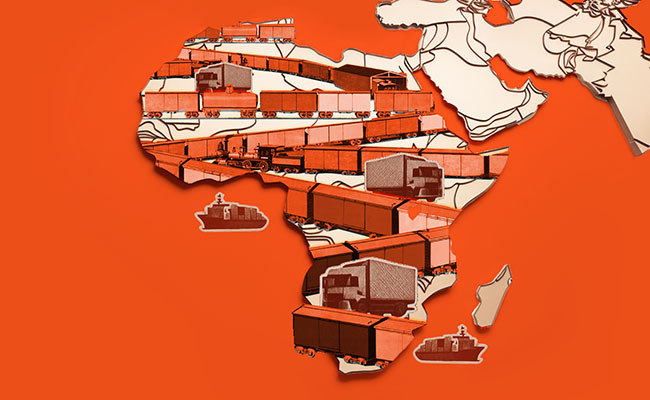
How does Africa fit in this scenario? In theory, the continent is definitely making great strides in both trade and wider continental integration, respectively exemplified by the Africa Continental Free Trade Area (AfCFTA), and African Union (AU). AfCFTA, according to the Brookings Institutions, is a market of 1.4 billion people, with a combined GDP of USD 3.4 billion. Furthermore, through AfCFTA, Africa could raise its export to the rest of the world to 32% by 2035. While AfCFTA and AU represent ideals of trade, unity, and power, African states have not given these institutions the power they deserve. AfCFTA and AU can become stronger, with better negotiation abilities, only when their powers supersede that of the individual member countries.
AfCFTA allows Africa to explore intra-continental market, which presently stands a third after Africa-EU and Africa-China trade. While external trade is vital, it is also important for the 55 African Union countries to live up to the expectation of free movement of goods and services across the continent. The Brookings Institution observes that, as one of the world’s largest free market areas, AfCFTA has the potential to grow the African economy and boost employment much more than capital-intensive extractive industry that supplies international market.
This is a clarion call for the continent to act promptly, to take advantage of intracontinental trade under the ambit of a supranational African body.
3. The Future Starts Now
In a recent meeting held in Sorbonne University in Paris, the French President, Emmanuel Macron, and the European Union (EU) chief commissioner, Ursula Von der Leyen, revealed Europe’s preparedness to “attract US-based scientists hit by Donald Trump’s crackdown on academia.” These are researchers and scholars whose works are threatened by cuts in funding to research institutions and people targeted by diversity policies . Through this strategy, Europe could become the new scientific frontier of artificial intelligence. The two European leaders spoke confidently on behalf of the bloc, precisely because the various countries of the union have given up some of their powers to the supranational body. In fact, 13 EU countries wrote to the “European Commission urging it to move fast to attract academic talent”.
A strong Africa would require similar structures and processes that respond promptly to the changing times, with the different countries being confident enough to cede some of their powers to the AU, ease border control, and more importantly, facilitate AfCFTA expectations. Beyond taking advantage of its huge natural and human resources, Africa must be pragmatic when it engages with the rest of the world.
The momentum is already there and the youth in Africa is rising against stale political systems. At best, Africans are advocating for a strong Africa, free from colonial and imperialist influences as seen in the social media outpouring of support to Ibrahim Traore of Burkina Faso. African preparedness for the future must however be informed by an ideology of a united Africa, in line with Marcus Garvey’s dream of African nationalism one hundred years ago. Garvey urged Africans to have total control of the self, the nation, and resources. Garvey wanted African’s wealth to be in the hands of Africans. Such a blanket view of Africa is even interesting, considering that many people in the western world see Africa as a country. It is time for Africa to embrace this and see itself as one country, united in political and economic fronts, with overriding supranational institutions serving the continent’s interests.
Conclusion and Recommendations
Preferential trade agreements such as African Growth an Opportunity Act (AGOA), which has literally collapsed following Trump’s tariff impositions, emasculate Africa. Africa cannot continue to be seen and treated as a continent needing charity when, indeed, it has more to offer the world market. To gain more respect, the various countries must empower the AU and AfCFTA, making them more potent, beyond their present enfeebled status of the proverbial toothless barking dogs. They can be influential only when independent, self-determining, and rest on solid grounds. Without a strong power base, Africa and African institutions will continue to be weak, belittled, desperate, and vulnerable to the more powerful external forces.
To function properly, the AU and AfCFTA require (i) financial support from member states, (ii) legal frameworks that support their operations, and (iii) an adequate infrastructure within the continent. These are necessary for Africa to empower itself from within.
Member states should provide adequate financial support needed by these institutions to work effectively and independently. Without sufficient finance, the AU will not be able to achieve its objectives of greater African unity and solidarity. Similarly, inadequate finance will possibly hamper AfCFTA from implementing, coordinating, and enforcing free trade activities within the continent. Financial support to these institutions is a political question and a matter of priority. A country’s monetary support to the AU and AfCFTA demonstrates its willingness to grant authority to the supranational bodies. This in turn motivates the institutions to live up to the expectations of the member states. To avoid compromising their service to Africa, the organizations must not accept funding from abroad, especially from Europe, North America, and China.
Secondly, members of the organizations should develop legal mechanisms to hold defaulters accountable. To ensure conformity, they could sanction states that fail to honor financial obligations to the organizations as well as those that do not ease intracontinental free trade. Additionally, the member states need to develop mechanisms to assess members’ adherence to AU and AfCFTA standards.
Finally, member countries must invest in trade infrastructure – the land, sea, and air transportation systems, which allows for easy and fast movement of people, goods, and services. Digitalization should be one of the infrastructural investments; it improve economic activities by cutting costs, generating more revenue, and improving customer satisfaction. Digitalization will further improve security and transparency, facilitating African integration.

Dr. Primus M. Tazanu
Dr Primus M. Tazanu is a Research Fellow in Governance at the Nkafu Policy Institute .He is equally a lecturer at the Department of Sociology and Anthropology, University of Buea, Cameroon. Primus holds a PhD in social anthropology from the University of Freiburg, Germany

