
































Introduction
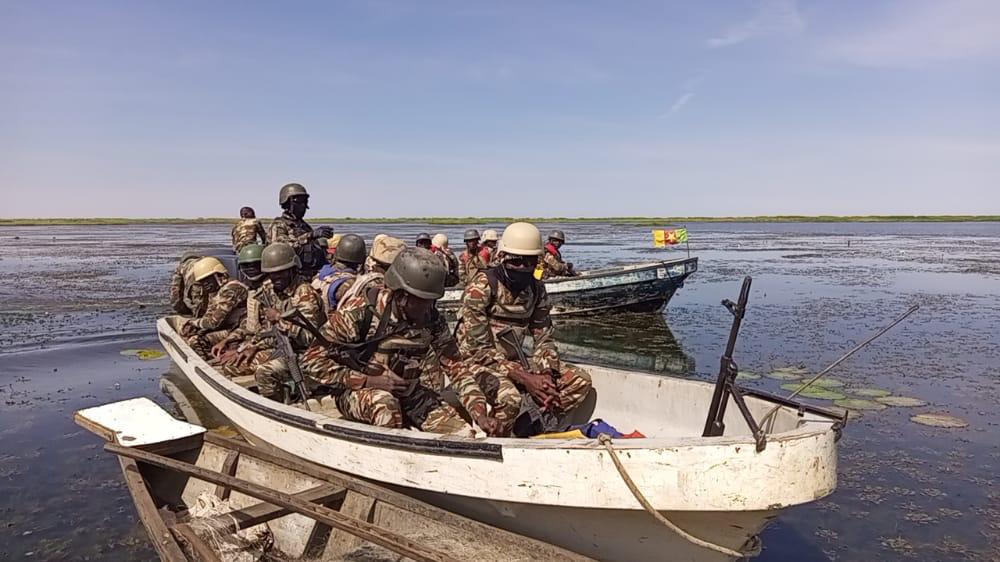
The Lake Chad Basin (LCB) region which encompasses parts of Cameroon, Chad, Niger and Nigeria has struggled with a variety of insecurity issues for decades including; highway robberies, kidnapping, banditry, amongst others. These issues have been compounded by the rise of terrorist groups like the Boko Haram and the Islamic State West Africa Province (ISWAP) causing widespread violence and instability. The result has been a humanitarian crisis with massive internal and cross-border displacements [1]. In response to these challenges, transnational cooperation emerged between the four countries of the region through initiatives like the Multinational Joint Task Force (MNJTF), which has been working since 2015 to combat these terrorist groups collectively, with support from Benin. Despite these efforts to foster regional military cooperation to combat terrorism in the Lake Chad Basin, there is growing concern around the deterioration of these collaborative mechanisms in light of the increasing terrorist activities. These trends will be further examined in this paper, emphasizing the pressing need for renewed efforts and innovative approaches to combat terrorism in the region.
- A view of the current security landscape in the LCB
Recent months have seen a significant increase in security incidents by Boko Haram and its affiliates in the Lake Chad Basin. Reports indicate that there was a 23% increase in the number of security incidents between 2023 to 2024, a 4% increase in refugees, and an 8% increase in internally displaced persons (IDPs) [2]. By the end of 2024, there were 2,197 security incidents reported, with 3,621 people killed, 3.1 million displaced internally within the region and over 267 refugees. These incidents highlight escalating violence in the region and indicate a failure in counter terrorism efforts. Statistics on recent deadly attacks show that at least 81 people were killed and others missing in Mafa, Nigeria, following an attack in September 2024, while 6 were killed in Niger by an improvised explosive device (IED) in the same month. The following month, over 40 Chadian soldiers were killed in an attack by Boko Haram. In November 2024, an attack on Mayo-Tsanaga in Cameroon left 11 people dead [3]. On 12th January 2025, more than 40 civilians were murdered by Boko Haram during an attack on farming communities in Borno state, north-east Nigeria [4]. In March 2025, Boko Haram fighters, disguised as herders carried out a sophisticated attack on the Multinational Joint Task Force (MNJTF) base, in the Nigerian border town of Wulgo, killing at least 12 Cameroonian troops and injuring several others, while another attack took place the following day on an army base in Nigeria’s northeastern Borno state where at least 16 people were killed [5].
In response to terrorism in the region, several mechanisms were put in place notably, the Multinational Joint Task Force, the Regional Stabilization Strategy, the Governors’ Forum, as well as community resilience initiatives. Each of these mechanisms have made significant progress in the stabilization process of the region. Some of their initiatives include; developing and harmonizing regional policies, sharing best practices, provision of basic services and livelihood opportunities, rehabilitation and reconstruction, amongst others [6]. The Multinational Joint Task Force (MNJTF) has been the only operational regional security mechanism fighting terrorist insurgency in the region since 2014. Despite the successes recorded by the MNJTF, insurgents have been able to swiftly reorganize and adopt new tactics. The latest assaults by these terrorist organizations shows that their new strategies, involving the acquisition and utilization of advanced weaponized drones has improved their capacity to operate. This shift in strategy marks a turning point for counter terrorism efforts in the region and raises a concern about how regional forces can adjust to these new tactics.
- Factors contributing to a strain on Regional Cooperation in the response to terrorism
The MNJTF which has been the sole regional security mechanism in the LCB has frequently disrupted Boko Haram and its factions by destroying its facilities, weapons supplies, and workshops that produce weapons through a number of operations. They have also neutralized terrorists, including their commanders, liberated occupied communities, recued hostages, and seized military and logistical equipment [7]. However, in recent months there has been a strain in military cooperation marked by geopolitical tensions among states of the Lake Chad Basin region. Chad’s initial threat to leave the MNJTF, and Niger’s recent departure from the force highlight the force’s basic shortcomings. Niger’s withdrawal comes at a time when insecurity is a serious concern in the region, and there is a need for strengthening regional security mechanisms. Several factors could be noted to account for this strain in relationship between the countries; notably political instability and governance issues within member states. A case in point is Niger’s military Junta citing security concerns and the need to protect their national assets; particularly oil infrastructure, as the main reason for pulling out from the MNJTF [8]. Additionally, after her strained relationship with ECOWAS, following the 2023 coup d’état, Niger has prioritized domestic security and the Alliance of Sahel States (AES) with Mali and Burkina Faso, which intends to establish a special army of 5,000 soldiers to fight Boko Haram [9]. Meanwhile, the MNJTF has been dealing with a number of challenges inter alia, insufficient troops, limited financial resources, troubles with properly communicating and fighting improvised explosive devices (IEDs), division and poor coordination all of which have contributed to the growth of insurgency throughout the region [10].
- Implications of strained regional cooperation for Security in the LCB
The existence of friction between countries of the region, portrayed by Niger’s exit from the MNJTF has prompted peace and security analysts to caution that this security risk may undermine regional counterterrorism initiatives, especially along the border between Niger, Nigeria, and Chad, which is a crucial area for terrorist organizations to operate [11]. The effectiveness of multinational forces relies heavily on collaboration and shared intelligence. Since each of these nations provides soldiers, information, and resources to fight insurgents and uphold regional security, the absence of one member might impair operational capabilities and decrease overall effectiveness against insurgent organizations. Prior to leaving the MNJTF, Niger contributed between 1000 to 1500 troops that provided logistics and intelligence, as well as conducted cross-border military operations. According to Deutsche Welle (DW), Niger’s departure from the MNJTF will make counterterrorism measures less coordinated and leave security gaps open for Boko Haram and other terrorists to take advantage of, which would seriously jeopardize regional stability [12]. Security analysts point that a military alliance is highly needed in the region, given the porous nature of the borders that makes for easy movement across the countries. This is a weakness that Boko Haram and its factions can exploit to increase attacks on civilians and military bases across the region.
Additionally, a resurgence in violence due to lack of regional collaboration, could worsen the humanitarian situation, leading to increased unemployment, poverty, food insecurity and displacements in the region. This can make young people susceptible to violent radicalization and it becomes easier for them to be recruited by these terrorist organizations.
Finally, Niger’s decision to withdraw from the MNJTF may prompt other member nations to consider similar withdrawals in favor of prioritizing their national interests.; particularly Chad which had previously indicated a potential exit in October 2024. Such developments could create diplomatic tensions among member states who regard cooperation as crucial for maintaining stability in the region.
Policy proposals
- Niger’s withdrawal from the MNJTF would worsen the existing operational challenges of the force if care is not taken. To counteract this, the remaining member states need to improve their technology resources and intelligence-sharing capacities. Creating a centralized intelligence database that enables the sharing of data about insurgent activities and strategies in real time is one way to accomplish this. Also, investing in surveillance tools like drones and satellite imaging, as well as carrying out joint intelligence-focused training for forces of all member states would ensure they all have sharedknowledge and expertise in countering terrorism. In addition, member states should deploy more trained soldiers to fight terrorists in the affected regions.
- To close the gap left by Niger, the remaining members of the MNJTF need external support in their fight against terrorism. Neighboring countries and western countries should provide assistance to LCB countries in the form of military support, financial aid directed towards military training programs, providing advanced military equipment such as armored vehicles, logistical support, good communication systems, etc., to enhance their operational efficacy against terrorist organizations
- Governments of the Lake Chad Basin should prioritize community development programs aimed at improving education, healthcare, and employment opportunities for populations. This will address the socio-economic conditions that make the people susceptible to extremist ideologies.

Muriel M. Kinkoh
Muriel Kinkoh is Research assistant at the Peace and Security division of the Nkafu Policy Institute. Prior to joining the Foundation, she was administrative and coordination intern at ILIAN Consulting Company Limited; supporting advocacy, peacebuilding and conflict resolution programming.

