






















- Socadel plans to install a pilot community solar booth in Bertoua.
- The project will test a local electricity supply model before any wider rollout.
- Key details, including funding, costs and the business model, have yet to be disclosed.
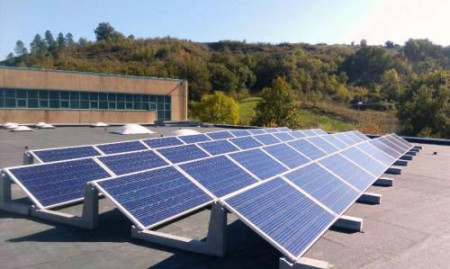
Cameroon’s electricity company Socadel plans to install a pilot community solar booth in Bertoua, in the country’s East region, as it explores a decentralized model for delivering electricity that could later be replicated in other communities.
Known as the Solar Booth Project, the initiative remains in its early planning stage. Socadel has yet to identify the exact location, with several public sites in Bertoua still under consideration. The company has also not disclosed the project’s cost, financing arrangements, implementation timeline or the communities and facilities expected to benefit.
A small pilot with limited capacity
The planned installation will have a photovoltaic capacity of between 10 and 15 kilowatt-peak (kWp), a measure of the maximum output solar panels can generate under standard test conditions. On its own, however, that figure does not indicate how much electricity the system will actually produce.
Actual generation, measured in kilowatt-hours (kWh), will depend on factors including solar irradiation, equipment performance, electricity demand and whether the system includes battery storage. Socadel has not disclosed any plans for storage capacity, making it impossible at this stage to assess how long the system could operate without sunlight or during outages on the conventional grid.
Given its planned size, the installation is not intended to address Bertoua’s broader electricity needs. Instead, it is expected to serve nearby community uses, although the specific applications have not yet been defined.
Business model still unclear
The project is expected to include electricity metering, a local governance structure and a revenue-tracking system designed to monitor electricity distribution and income generated by the installation.
Several important questions remain unanswered, however. Socadel has not indicated what tariffs users would pay, who would collect payments, how revenues would be used or who would be responsible for maintenance costs. The company has also not said whether it will operate the facility itself or transfer management to the municipality, a community organization or a private operator.
Those details will be critical in determining whether the model can be financially sustainable. Community solar systems typically require revenue not only to cover daily operating expenses but also to finance maintenance and eventually replace batteries, often one of the project’s most expensive components.
Expansion depends on pilot results
Bertoua has previously benefited from several solar-powered street lighting projects, but Socadel’s initiative would go further by supplying electricity for community uses while introducing metering and a revenue management system.
The pilot comes as Socadel seeks funding to modernize its operations. On July 1, 2026, the company appointed General Bank of Cameroon to raise CFA60 billion for investments in electricity generation, distribution and retail. However, no public information links the Bertoua pilot to that financing program.
When announcing the fundraising initiative, Socadel Chairman Antoine Ntsimi said “results must speak louder than announcements.” Whether the pilot expands to other communities will depend on its cost, implementation timeline, beneficiary profile and operational performance. For now, the company has announced neither a national rollout plan nor installation targets for additional solar booths.
Ludovic Amara

