























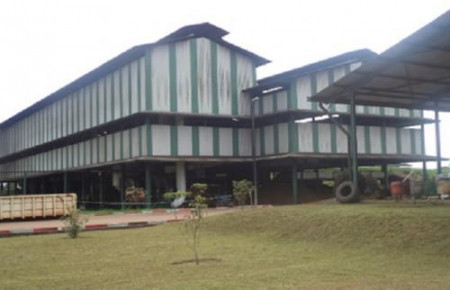
(Business in Cameroon) – An investigation by Green Development Advocate (GDA), a Cameroonian civil society organization, is contesting the legality of land concessions awarded to Société Camerounaise de Palmeraies (Socapalm) in Édéa, in the Littoral Region. The report examines years of disputed land management, non-transparent privatization, and ongoing tensions between the palm-oil producer and local communities.
Since 2023, Socapalm’s replanting campaigns have reignited disputes with residents of Apouh A Ngog, Koukouhè, Onguè, and Déhanè, who accuse the company of repeatedly seizing and misusing their ancestral lands. The GDA report noted recurring conflicts between Socapalm’s need for land to expand plantations and communities’ efforts to preserve their customary territories.
The study identified several major irregularities in land use, estimating that nearly 1,000 hectares may be unlawfully held.
At the heart of the dispute is a March 2021 prefectural decree that granted 874 hectares of Apouh land to Socapalm. The GDA argues the decree is legally invalid, noting that land concessions of that scale require presidential authorization under national regulations.
The report said Socapalm had encroached on about 705 hectares. In Koukouhè, it found an exploited area of 1,024 hectares compared with the 800 hectares initially allocated — a difference of 224 hectares. The GDA also cited the cultivation of 874 hectares at Apouh, allocated by the 2021 decree, even though the provisional concession was still pending transmission — a situation it described as illegal agricultural activity before the land was formally granted.
The investigation highlighted wide gaps between officially conceded and actually exploited areas. An expert report commissioned by the Ministry of State Property and Land Tenure (Mindcaf) mentioned a definitive concession for 1,018 hectares, but a second report dated April 6, 2022, omitted that reference and found notable discrepancies between the stated figures and on-the-ground boundaries.
Socapalm Denies Claims, Cites Legal Titles
Socapalm issued a statement rejecting the GDA’s findings, saying the allegations stem from “erroneous interpretations” and emphasizing that all its land titles were issued by the Cameroonian State. The company pledged to provide “complete, verified and balanced information, in strict compliance with the facts and applicable legal procedures.”
On the 2021 prefectural decree, company management said the local prefect had confirmed that “the village of Apouh did not exist at the time the disputed titles were signed,” calling this a “clear contradiction between the statements of community representatives and those of the administration.”
Socapalm added that in 2017, with Mindcaf’s support, it launched a comprehensive land-rights review involving local authorities and community representatives to reach a final settlement of land claims through ministry arbitration.
The company also disputed claims that it had illegally expanded by 707 hectares, saying the area corresponds instead to 682 hectares inherited from SPROA and “integrated into a land title dating back to 1929, long before the creation of the current company.” Management maintained it was “incorrect to speak of encroachment or dispossession.”
According to Socapalm, Mindcaf’s densification and boundary-marking work later led to the regularization of its concessions and the issuance of permanent land titles in March 2025. The size of the Édéa concession was reduced to 1,086 hectares, with the excised plots to be returned to the State of Cameroon, which the company recognized as the “sole owner and competent authority” over the land.
Amina Malloum

