



























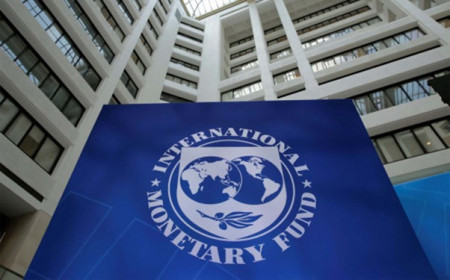
The International Monetary Fund estimated that Cameroon’s tax revenues remained well below the country’s fiscal potential in 2024, as falling oil revenues and rising debt servicing costs put pressure on public finances.
In a report published in May 2026, the IMF estimated Cameroon’s fiscal potential at 18.1% of GDP, compared with tax revenues of around 12% collected by the central government. The institution said stronger domestic revenue mobilisation would be needed to finance infrastructure, health and education spending while maintaining fiscal stability.
Public debt stood at around 43% of GDP, according to the IMF, while debt servicing is expected to absorb nearly 17% of tax revenues over the next three fiscal years. The Fund also said Cameroon’s risk of debt distress is now considered high, with key external debt service indicators exceeding recommended thresholds under its baseline scenario.
The IMF said recent reforms introduced by the government had laid the groundwork for better tax collection, particularly through the digitalisation of tax administration. Under its 2023-2025 tax modernisation plan, Cameroon made electronic filing, payment and invoicing systems mandatory. Authorities also increased the number of VAT filers from 14,000 to 22,000 in 2024 through digital taxpayer registration and electronic invoicing tools.
Despite these measures, tax collection remains below regional and international averages. Cameroon’s tax-to-GDP ratio stood at around 12% in 2024, compared with roughly 15% across sub-Saharan Africa and 16% for lower-middle-income countries. The IMF said the country still relies heavily on indirect taxes, particularly VAT and excise duties, while direct taxes such as personal income tax and property taxes remain underdeveloped.
At the same time, oil revenues continued to decline. The IMF said petroleum-related income — including corporate taxes paid by oil companies and royalties from the National Hydrocarbons Corporation — fell to around 2% of GDP in 2024 due to lower production and volatile global oil prices.
Non-oil revenues remained relatively stable at between 12% and 13% of GDP, mainly supported by indirect taxation.
The IMF also identified tax exemptions and special tax regimes as a major source of revenue losses. The report estimated tax expenditures at 1.8% of GDP and 14.1% of non-oil tax revenues in 2024. VAT exemptions accounted for the largest share of these losses, followed by customs duty exemptions.
The institution added that many exemptions, particularly those applied to food products, disproportionately benefit higher-income households.
“The reforms recently undertaken in line with the authorities’ medium-term revenue mobilisation strategy have laid solid foundations,” the IMF document stated, adding that “tax revenues can still be significantly increased, notably through rationalising tax expenditures, broadening the tax base and modernising tax administration.”
The IMF outlined a three-phase reform programme aimed at increasing non-oil revenue collection. The first phase focuses on short-term measures such as removing obsolete VAT exemptions, expanding digital tax systems and improving compliance monitoring. According to the institution, similar measures implemented in other countries have generated additional revenues equivalent to around 0.5% of GDP within one to two years.
The second phase would involve broader reforms to VAT, personal income tax and corporate taxation, including the gradual reduction of exemptions and the modernisation of property tax systems. The IMF estimated these reforms could generate additional revenues equivalent to about 2% of GDP over the medium term.
In the final phase, authorities would expand property tax reforms nationwide and strengthen advanced digital compliance systems. The IMF said comprehensive reforms of this kind have increased tax revenues by between 3% and 5% of GDP in some countries over several years.
The report also highlighted persistent weaknesses in Cameroon’s tax administration. VAT declaration compliance stood at around 73% in 2024, below international best-practice levels of more than 90%, particularly among smaller taxpayers.
The IMF further noted that old tax arrears continue to account for a significant share of outstanding liabilities, although previous recovery campaigns enabled the government to recover revenues equivalent to as much as 1.5% of GDP from public enterprises.
According to the IMF, the effectiveness of the reform programme will determine how quickly Cameroon can rebuild fiscal buffers and reduce pressure on public finances as the country seeks to sustain growth, finance infrastructure development and reduce dependence on volatile oil revenues.
Mercy Fosoh

