




















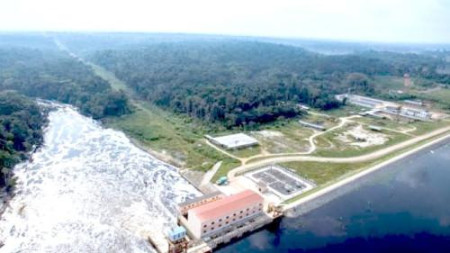
Hydro-Mekin is taking the next step toward restoring its 15 MW Mekin hydropower plant by launching a restricted tender to select a consulting firm that will define the scope of the rehabilitation work.
The state-owned company is seeking a consultant to carry out a full technical assessment, prepare a detailed engineering design, and develop the bidding documents for the companies that will eventually carry out the rehabilitation.
According to the tender notice, the consulting contract has an estimated budget of CFA150 million ($259,000), financed through Hydro-Mekin’s 2026 budget. The assignment is expected to take four months.
The study aims to determine the repairs needed after what the company describes as “two major events” that affected the facility. However, the tender does not disclose the nature of those incidents or the extent of the damage.
The selected consultant will review the equipment manufacturer’s assessment reports and maintenance records prepared before and after the incidents. The firm will also evaluate the condition of the plant’s equipment, recommend technical solutions, estimate rehabilitation costs, and prepare the tender documents for the construction phase.
Three international engineering firms have been shortlisted: France’s Artelia, Canada’s CIMA International, and France’s ISL Ingénierie. The current procurement process is limited to selecting the consultant and does not cover the rehabilitation work itself.
Years of technical setbacks
The new assessment comes after years of operational challenges at the Mekin plant, which has struggled to reach stable operation since construction was completed.
Built on the Dja River in Cameroon’s South Region, the facility has an installed capacity of 15 MW and was designed to strengthen electricity supply in the region while feeding power into the country’s Southern Interconnected Grid.
The project, however, has faced repeated technical, environmental, and administrative delays. Although commissioning was initially expected in 2015, the plant was not energized until June 2019, and even then it did not immediately enter stable commercial operation.
In 2020, a failure involving the plant’s neutral point coil forced operations to stop. After the component was replaced, Hydro-Mekin resumed testing ahead of a commercial launch that was initially scheduled for January 2021.
The plant did not begin supplying electricity to the grid until 2022. At the time, final acceptance of the facility, built by China National Electric Engineering Corporation, was expected during the fourth quarter of that year.
The latest tender suggests that significant work is still needed. The technical assessment will determine which equipment can be repaired, which must be replaced, and whether the damage is limited to specific components or affects the overall reliability of the plant.
Rehabilitation costs remain unknown
The CFA150 million budget announced by Hydro-Mekin covers only the engineering studies, detailed design work, and preparation of the bidding documents. The cost of the rehabilitation itself will not be known until the assessment is complete. It will depend on the condition of the generating units, electrical systems, automation equipment, hydromechanical infrastructure, and grid connection facilities.
The study is expected to provide Hydro-Mekin with a technical and financial roadmap before it commits to new investment. It should also reduce the risk of launching rehabilitation work without a complete assessment of a project that has already experienced multiple delays and corrective interventions.
Restoring an underperforming power asset
The rehabilitation comes as Cameroon seeks to strengthen its electricity supply by combining new generation capacity with the rehabilitation of existing infrastructure.
While Mekin’s 15 MW represents only a small share of the country’s installed capacity, the plant remains important for electricity supply in the South Region, where it was expected to improve service reliability and ease pressure on the grid.
For Hydro-Mekin, the priority is now to bring a public asset that has already received significant government investment into reliable operation. Whether that goal is achieved will depend on the findings of the technical assessment, the availability of funding for the rehabilitation work, and the company’s ability to deliver a lasting solution rather than another round of temporary repairs.
Amina Malloum

