













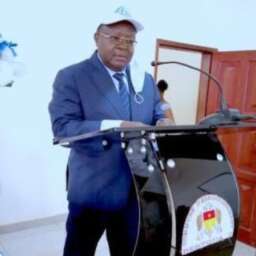



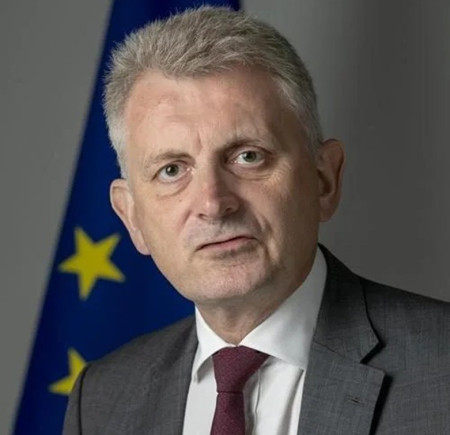
EU Ambassador to Cameroon Jean-Marc Châtaigner said European investment financing in Central Africa depends on CEMAC states maintaining active fiscal programmes with the IMF. He spoke at the Finance Week 2026 conference in Yaoundé.
Châtaigner identified several European financing mechanisms including, the European Investment Bank, the French Development Agency (AFD), Germany’s KfW, and the Team Europe framework as being currently limited in their deployment capacity due to stalled IMF agreements across the CEMAC zone. He also noted that Chad’s IMF programme had been affected by the absence of agreements in neighbouring member states.
“Without a credible budgetary trajectory, the European instruments: we can finance loans from the European Investment Bank, FEDS+ guarantees, the financing of our Team Europe cannot be deployed at the level required. Getting these IMF programmes back on track is therefore a determining factor in unlocking private investment potential,” he said.
Regional trade integration
Châtaigner cited figures indicating that intra-CEMAC trade represents approximately four percent of member states’ total external trade. He connected this to the absence of a region-wide Economic Partnership Agreement (EPA) with the EU, noting that Cameroon is currently the only CEMAC member with such an agreement in place.
“I regret that there is only an economic partnership agreement with Cameroon and not with the whole of the CEMAC because it would make far more sense to have this economic partnership at the regional level, to increase the capacity to weigh more in negotiations with European partners,” he said.
Chad, the Central African Republic, Gabon, Equatorial Guinea, and the Republic of Congo remain outside the EPA framework.
On Cameroon’s energy sector, Châtaigner noted challenges following the nationalisation of ENEO and the departure of its private foreign operator. He said decisions on governance would have implications for the Nachtigal hydroelectric project, which received Team Europe co-financing, as well as for the planned Kikot project.
“The energy sector in Cameroon is in serious difficulty. Decisions must be taken, notably on ENEO, which has just been nationalised following the departure of a private external partner. There are imperative decisions that must be made if we do not want to undermine Cameroon’s immense energy resources,” he said.
Châtaigner outlined EU strategic priorities for the CEMAC region under the Global Gateway initiative, including two transport corridors, Douala to N’Djamena and N’Djamena to Kampala as well as digital infrastructure, critical minerals, and agro-industrial value chains.
He also referenced the Cameroon-European Union Business Week, scheduled for 16-17 June in Yaounde alongside the Promote trade fair, organised with Eurocham and Cameroonian business partners. The event is expected to cover renewable energy, transport and logistics, digital sectors, and agro-industry, and will include panel discussions, business-to-business meetings, and an exhibition space.
Mercy Fosoh

