






















(Business in Cameroon) – The Bank of Central African States (BEAC), the central bank of the six-member Central African Economic and Monetary Community (CEMAC) has decided to raise its two main policy rates by 25 basis points. The decision was taken at the final meeting of the Monetary Policy Committee (MPC) for 2025, held on December 15 in Yaounde, Cameroon.
As a result, the policy rate for liquidity-providing auctions, known as the tender interest rate (TIAO), was raised to 4.75% from 4.5%. The marginal lending facility rate, which applies to overnight liquidity provided by the central bank to commercial banks for up to 24 hours, was increased to 6.25% from 6%.
The MPC’s decision marks a return to the monetary tightening cycle launched at the end of 2021. The BEAC had temporarily paused this stance on March 24, 2025, when it cut its key rates for the first time in three years after a prolonged period of gradual hikes. That easing was intended to revive bank lending and support economic growth across the sub-region.
Import pressure on foreign reserves
By raising its policy instruments again, the BEAC aims to make refinancing more expensive for commercial banks. The central bank expects this to translate into higher lending rates, thereby restricting access to bank credit for economic agents.
According to BEAC Governor Yvon Sana Bangui, the objective of the move is not to fight inflation, which stood at 2.2% in 2025 and fell below the community’s 3% tolerance threshold for the first time in three years, but rather to preserve the sub-region’s foreign exchange reserves. These reserves are projected to have declined by 2.6% by December 31, 2025, to CFA6,377.3 billion, equivalent to 4.2 months of imports, down from 4.9 months in 2024.
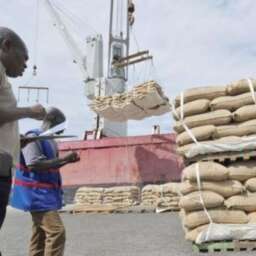
The BEAC says most bank financing in the CEMAC region is directed toward imports, leading to a steady erosion of foreign reserves. These reserves, built from export earnings and foreign currency borrowing, are used to pay for imports and are a key pillar of external stability.
Weak growth limits room for tightening
Under agreements linking CEMAC countries to France, the region’s foreign reserves are centralized in a single operations account and are used collectively to finance imports of goods and services across member states. Increased pressure on these external assets exposes the entire sub-region to payment tensions abroad and, if prolonged, could eventually trigger monetary adjustment measures, including a devaluation, should reserves fall below critical levels.
The BEAC governor said the scale of reserve erosion observed since 2023 would normally justify a more aggressive increase in policy rates to more forcefully curb import financing.
“However, we opted for a less drastic adjustment because we are also taking into account the need to revive economic growth, which remained weak in the sub-region in 2025,” Yvon Sana Bangui said.
According to the statement issued after the December MPC meeting, economic growth in the CEMAC region is estimated at 2.4% in 2025, down from 2.7% in 2024, reflecting a contraction in oil sector activity.
Brice R. Mbodiam

