













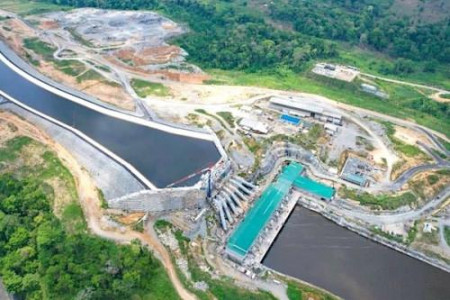
• (Business in Cameroon) – Cameroon’s energy sector witnessed significant growth from 2018-2025, driven by major projects like the Nachtigal hydroelectric dam, which reached full capacity in March 2025.
• The Nachtigal dam increased national capacity by approximately 30% and has reduced power outages.
• Cameroon has diversified its energy mix, incorporating gas-fired plants and solar power, while also expanding rural electrification and grid infrastructure.
The period 2018-2025 marked an acceleration in Cameroon’s energy sector. The commissioning of structuring projects has reshaped the national electricity landscape. This dynamic aligns with a strategy initially targeting 3,000 MW production capacity by 2020; execution delays have shifted this objective to 2030.
Nachtigal Dam: A Landmark Project
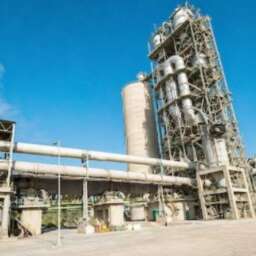
The Nachtigal hydroelectric dam remains the emblematic project of this phase. With a 420 MW capacity, it began supplying the grid in June 2024 and achieved full power in March 2025. This public-private partnership, involving the Cameroonian State, EDF, and the International Finance Corporation, represents a total investment exceeding CFA1,200 billion, including associated transmission lines.
The plant’s commissioning increased national capacity by approximately 30% and has already reduced the frequency of power outages. Construction generated over 3,000 direct and indirect jobs, stimulating the economy of the Centre region. Energy transmission lines between the Nachtigal dam and the southern interconnected grid will eventually complete the project. Their construction completion was scheduled for the third quarter of 2025, aiming to secure supply to the country’s main industrial hubs while reducing line losses.
The Lom Pangar regulating dam, inaugurated before 2018, fully demonstrated its utility during this period. Its 6 billion m³ reservoir regulates the Sanaga river’s flow and provides an average of 120 MW of additional power to downstream plants, improving production stability, especially during the dry season. The utilization of gas-fired thermal power plants further consolidates energy security. The Kribi plant (216 MW), fueled by Cameroonian natural gas, strengthens the Dibamba plant (88 MW), diversifying the energy mix and reducing reliance on hydrocarbon imports.
Diversification and Rural Electrification
The Guider solar power plant project (30 MW), commissioned in 2023, stands as the country’s first large-scale solar installation. It currently supplies over 150,000 residents in the North and mitigates regional energy disparities. The Rural Electrification Program (PER), endowed with over CFA200 billion, connected approximately 400 localities between 2018 and 2023, bringing electricity to more than 1.5 million rural inhabitants. Consolidated data for 2024-2025 remains unpublished; the objective of 500 localities and 2 million beneficiaries awaits confirmation.
Meanwhile, more than 2,000 km of power lines have been constructed or rehabilitated.
Modern transformer-equipped substations have reduced technical losses. Solar mini-grids are developing rapidly: about twenty pilot installations currently operate in Adamaoua, the North, and the Far North. Additional projects are underway to increase their number to over one hundred, but this figure has not yet been officially reached.
Institutional Development
The National Advanced Polytechnic School (ENSP) and the University Institute of Technology (IUT) have adapted their curricula to meet the technical needs of the new infrastructure, though the exact number of specialists trained between 2018 and 2025 remains unconsolidated. The Electricity Sector Regulatory Agency (ARSEL) continued modernizing tariff regulation and service quality. Cameroon’s participation in the Central African Power Pool (PEAC) prepares conditions for regional exchanges, although interconnections with Chad and the Central African Republic require finalization.

