





























Cameroon’s liquefied natural gas (LNG) export revenue continued to decline in 2025, reaching CFA350.2 billion, according to the latest foreign trade report published by the National Institute of Statistics (INS). The figure marks an 8.1% drop from 2024 and the lowest level recorded since 2022.
Data from the INS shows a steady decline in LNG revenue over the past four years. After peaking at CFA622 billion in 2022, earnings fell to CFA421 billion in 2023, then to CFA381 billion in 2024, before declining again in 2025.
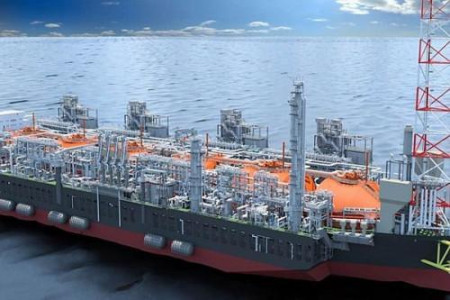
LNG accounted for 11.4% of Cameroon’s total export revenue in 2025. Most of these earnings come from the floating liquefaction unit located offshore Kribi, in the South region. This facility remains the country’s main infrastructure for monetizing its gas resources on international markets.
Cameroon entered the LNG producers’ club in March 2018 through a partnership involving France’s Perenco, the state-owned Société nationale des hydrocarbures (SNH), and Golar LNG, which specializes in floating liquefaction platforms. The consortium deployed the Hilli Episeyo floating unit off Kribi.
At launch, the facility produced 1.2 million tons of LNG, before increasing its capacity to 1.4 million tons.
Overall, Cameroon’s total export revenue also declined in 2025, falling to CFA3,084 billion, down 5.2% after an 8.8% increase in 2024. According to the INS, the drop was driven mainly by lower hydrocarbon revenues, including a 29.6% decline in crude oil earnings and an 8.1% drop in LNG revenue.
The decline was partly offset by strong performance in cocoa exports. Revenue from raw cocoa beans rose 18.7% year over year, highlighting the growing role of agricultural exports in Cameroon’s trade structure.
Amina Malloum

