




























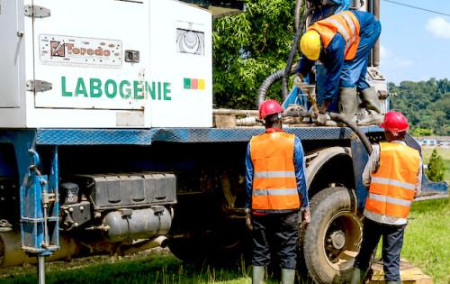
Cameroon’s National Civil Engineering Laboratory (Labogénie) reported a sharp slowdown in business activity in 2025, with revenue falling nearly one-third and weighing on earnings despite the company remaining profitable.
The state-owned company’s revenue declined 31% year over year to CFA3.19 billion, while net profit dropped 32.3% to CFA180 million. The results were approved on June 16, 2026, during the 56th meeting of the company’s board of directors in Yaoundé, chaired by Simon Shey Jones Yembe.
A year earlier, Labogénie had posted net profit of CFA266 million, meaning earnings declined by about CFA86 million in absolute terms. Revenue fell from about CFA4.6 billion in 2024 to CFA3.19 billion in 2025, a drop of roughly CFA1.4 billion.
The decline indicates that the company billed fewer services during the year. Labogénie specializes in technical studies, testing, inspections, and quality control for civil engineering and infrastructure projects. Its business depends largely on public contracts, infrastructure construction, and services provided to public and private project owners.
The published financial documents do not explain the reasons behind the decline. They do not indicate whether it resulted from fewer contracts, slower infrastructure activity, lower billings, or delays in project execution. Despite the sharp decline in revenue, Labogénie remained profitable. Pretax profit reached CFA266.7 million, while net profit after tax totaled CFA180 million.
The company’s net profit margin stood at about 5.6% in 2025, meaning it retained just over CFA5 in profit for every CFA100 of revenue generated.
Maintaining positive earnings despite weaker business activity suggests the company was able to contain part of its operating costs. However, the available data do not identify which expenses were reduced or how operating margins changed during the year.
As of December 31, 2025, Labogénie’s total assets stood at CFA21.71 billion. The board’s statement does not provide a breakdown of the balance sheet, making it impossible to assess the company’s receivables, debt, cash position, fixed assets, or short-term liabilities in detail.
The board approved the financial statements for the year ended December 31, 2025, and cleared management for its handling of the company. The external auditor also issued an unqualified certification of the financial statements, confirming that the accounts were audited in accordance with applicable professional standards.
The 2025 results present a mixed picture. Labogénie remained profitable, but the nearly one-third decline in revenue reduced its earnings and highlighted the need to rebuild business activity. The company’s future performance will largely depend on its ability to win new contracts, expand its technical services, and capitalize on its expertise in infrastructure projects while keeping costs under control.
Amina Malloum

