
























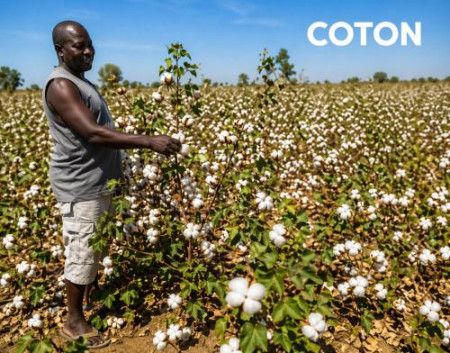
Cameroon’s cotton sector mobilizes about CFA60 billion in seasonal credit each year to support farmers, according to figures presented by Sodecoton on March 31, 2026, in Garoua. The funding is used to finance inputs and agricultural equipment for producers in the Adamaoua, North, and Far North regions.
Between 150,000 and 200,000 farmers benefit from this system, which remains a central pillar of financing for cotton production in the country’s northern zones.
In practice, the funds are often raised by the Cameroonian government from international lenders and then passed on to Sodecoton. The state-owned company channels the resources to the National Confederation of Cotton Producers (CNPC Cameroon), which handles distribution to farmers and oversees repayment.
According to Sodecoton’s managing director, Mohamadou Bayero, the system delivers strong repayment performance. Loans are typically recovered directly from proceeds generated by cotton sales, resulting in repayment rates that frequently reach 100%.
“Thanks to reforms in the sector, producers are disciplined. Those who fail to repay their input loans are not eligible for the next season, and repeat cases can be removed from the system,” he said. “Some farmers even sell assets to repay their loans and remain eligible for future campaigns,” he added, highlighting the role of CNPC Cameroon in raising awareness among producers.
The role of the producers’ organization has expanded over time. Since 2004, CNPC Cameroon has managed the supply of inputs and agricultural equipment across the sector. It is also involved in organizing farmers into groups and supporting their professional development.
The organization has also set up grain banks in cotton-producing areas to help farmers access food at affordable prices during lean seasons. This initiative addresses food insecurity risks in Cameroon’s northern regions, where vulnerability remains high.
BRM

