
































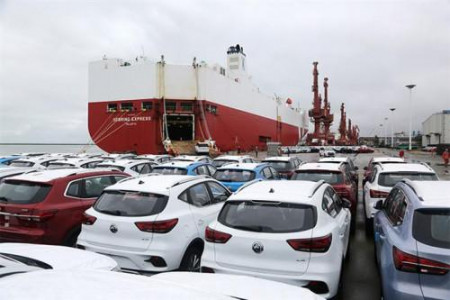
(Business in Cameroon) – Imports of transport equipment into Cameroon reached CFA375 billion in 2024, up 76.8% compared with CFA212.1 billion in 2019, according to the latest national accounts published by the National Institute of Statistics (INS). The 2019 figure was the second-lowest of the period, after the CFA166.5 billion recorded in 2020 during the COVID-19 pandemic, which slowed global trade.
Since then, imports have steadily increased. They stood at CFA258.6 billion in 2021, crossed the CFA300 billion mark in 2022, and rose to CFA371.8 billion in 2023 before hitting CFA375 billion in 2024.
The surge in imports coincides with lower customs tariffs linked to the Economic Partnership Agreements (EPAs) between Cameroon, the European Union, and the United Kingdom. Customs data show that the EU, China, and the United Arab Emirates (Dubai) are the main sources of vehicle imports into Cameroon. In customs classification, transport equipment falls under the “vehicles” category, which includes trucks, buses, passenger cars, and special vehicles such as ambulances and fire trucks.
Tariff reductions under EPA
Under the EPA, tariff cuts on so-called “Group 2” products — including trucks and trailers — began in Cameroon on August 4, 2017, with a 15% annual reduction in duties. By 2023, these imports from the EU and the UK were fully exempt from customs duties, helping drive the rise in transport equipment imports.
Other categories also benefited. Special vehicles (“Group 1” products) have been exempt from duties since August 4, 2019, following a phased reduction that started in 2016 at a rate of 25% per year. Passenger cars (“Group 3” products) have been gradually exempted from 10% of customs duties each year since January 1, 2021, after a one-year delay in the fifth phase of tariff dismantling originally set for August 2020.
China strengthens its position
Beyond tariff cuts for EU and UK vehicles, higher imports also reflect growing purchases from China, which is not part of the EPAs. China has become Cameroon’s top supplier in recent years, taking 18.9% of the market in 2023, ahead of India and France. The surge was driven by large sales of vehicles of all types and their accessories, according to INS data.

