



















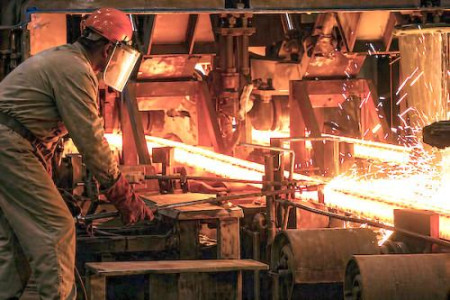
A government-led mission has completed a four-day tour of metal processing plants in Douala as part of efforts to strengthen integration between Cameroon’s mining and metallurgy sectors.
The delegation, led by Dr. Tang Ahanda, head of the strategic committee and special adviser to the prime minister, visited facilities operated by members of the Cameroon Organization of Metal Processing Industries (Ocitram), including Aciéries du Cameroun, Alucam, Metafrique, Prometal, and Prolau SA. The team also toured Acero Metal, a rebar producer outside the association.
According to sources close to the process, the visit had three main objectives: assess current production of ferrous products, identify challenges facing operators, and gather industry expectations to improve competitiveness, particularly in the context of opportunities offered by the African Continental Free Trade Area (AfCFTA).
The committee plans to carry out a similar review of mining companies in May 2026. The broader goal is to propose measures that will improve integration across the mining and metallurgy value chain.
Access to raw materials emerged as a key constraint. Limited scrap availability and delays in launching major mining projects—especially in iron ore and bauxite—are preventing factories from operating at full capacity. These projects are expected to supply local processors in line with quotas set under the mining code.
Energy is another major challenge. Industry players pointed to high costs and unreliable supply as barriers to production. They also raised concerns about compliance with standards, citing the presence of imported metal sheets that do not meet quality requirements.
The issue of industrial planning was also discussed. According to sources, domestic production capacity in the metallurgy sector exceeds local demand. This imbalance has led the government in recent years to suspend imports of certain construction materials, including rebar.
The strategic committee overseeing these efforts was established by the prime minister on December 10, 2025. It is tasked with diagnosing structural challenges in the mining-metallurgy sector and proposing reforms.
Its mandate includes developing a reliable iron ore supply chain for local steel producers, enforcing local processing requirements under the mining code, protecting domestic industries, improving competitiveness for regional markets, and supporting the development of a national and international metals value chain.
BRM

