























Cameroon plans to ease congestion in Bertoua, a key transit point on the Douala-Bangui corridor.
On April 21, 2026, the Bertoua city council validated a technical step related to the route of a planned bypass road. The project, which spans about 28 kilometers, aims to divert part of the heavy truck traffic that currently passes through the city center.
Preliminary plans show the route starting from Bonis, beyond the weighbridge, before skirting central Bertoua through areas including Ngaikada and Yadia, and reconnecting with the Mandjou axis. Technical teams from the Ministry of Housing and Urban Development and the Bertoua city authority had already conducted field missions in June 2025 to identify the route.
The project is led by the state, with the Ministry of Housing and Urban Development acting as the main contracting authority. On March 17, 2026, the Public Contracts Regulatory Agency launched a restricted national tender for feasibility studies under an emergency procedure. Funding is expected to come from the ministry’s public investment budget for 2026 and beyond.
Following the validation of the route, the project will move into detailed studies, which will determine costs, timelines, and implementation plans. At the same time, local authorities have begun consultations with traditional leaders and communities in affected areas to prepare for land acquisition.
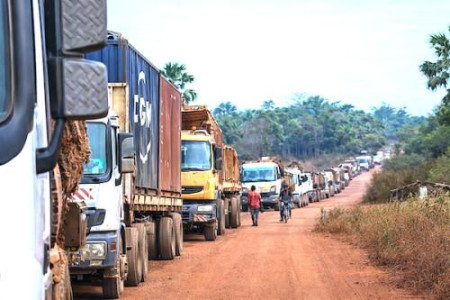
The stakes go beyond urban mobility. Bertoua lies along National Road 10, a major corridor linking Cameroon to the Central African Republic. The steady flow of freight trucks has put pressure on urban roads, contributing to deterioration, traffic delays, and higher accident risks. Previous reports have already flagged the Ayos–Abong-Mbang–Bertoua stretch as a critical section due to heavy truck traffic.
For local authorities, the bypass is a priority project. Mayor Jean Marie Dimbele Sodea describes it as essential not only for the city but also for the East region and the broader sub-region. The road is expected to ease congestion, reduce conflicts between local and transit traffic, and improve road safety.
The project also carries regional importance. The Douala-Bangui corridor is a vital supply route for the Central African Republic. According to Cameroonian customs data cited by Investir au Cameroun, about CFA55 billion worth of goods for CAR transit through the Port of Douala each year before being transported to Bangui.
By improving traffic flow through Bertoua, the bypass could strengthen the efficiency of this trade corridor. Its impact, however, will depend on several factors, including the completion of studies, secured financing, land clearance, and the timeline for construction.
Frédéric Nonos

