






























Twenty-seven young agricultural trainees have returned to their production zones across Cameroon following a ten-day residential programme at the Kribi Plantain Sector Incubation Centre. The deployment marks the first operational output of a government-backed tripartite partnership aimed at transforming the country’s plantain value chain.
The tripartite agreement
The initiative follows the signing of a tripartite framework agreement between the National Association of Plantain Sector Actors (FBPC), Green Springs Digital University Institute (GSDUI) and Empowerher Tech Foundation (EHTF), under the supervision of the Minister of Agriculture and Rural Development, Gabriel Mbaïrobé. The agreement aims to facilitate youth incubation and integration into plantain-related trades.
The signing ceremony, held on 27 March, also marked the distribution of 27 starter kits to participants. These included digital learning materials, training videos and basic equipment such as hole-digging machines. The beneficiaries were subsequently deployed to the Kribi incubation centre, where they underwent practical training before returning to their respective production basins.
For the pilot phase involving the 27 participants, a minimum turnover of 45 million CFA francs is projected over a 10-month period. The programme also outlines an industrialisation phase, which envisages the establishment of small-scale processing units within academic campuses. These units are expected to transform plantains into higher value-added products, including chips and flour.
The plantain sector in Cameroon
Speaking at the event, the agriculture minister underscored the economic weight of the plantain sector in Cameroon. According to official figures from the Ministry of Agriculture and Rural Development, plantain accounts for approximately 16% of rural producers’ incomes and contributes about 4.5% to the country’s agricultural GDP. It is ranked as the fourth staple crop after maize, rice and cassava.
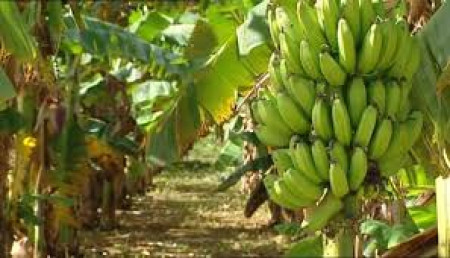
The sector mobilises more than 700,000 actors nationwide, of whom over 92% are smallholder farmers. Production occurs throughout the year, with seasonal peaks recorded between November and March. Cameroon also cultivates an estimated 150 plantain varieties.
However, structural inefficiencies persist. Ministry data indicate that average yields in smallholder settings range between four and seven tonnes per hectare, compared to potential yields of 15 to 20 tonnes per hectare when recommended technical practices are applied. Post-harvest losses are estimated at between 35% and 40% of total production as a result of gaps in storage, processing and logistics.
Recent data from the Food and Agriculture Organization (FAO) confirm that plantain remains a critical food security crop across Central and West Africa, with Cameroon among the leading producers in the subregion. The World Bank has also identified value chain development and agro-processing as key levers for increasing agricultural productivity and rural incomes in Cameroon.
The current incubation programme is part of broader efforts by authorities and sector stakeholders to address productivity gaps, reduce losses and expand market opportunities through value addition.
Mercy Fosoh

