





















The government of Cameroon wants to rebuild its oil refining capacity and develop a domestic fertilizer industry. The plan is a response to the economic impact of the U.S.-Iran conflict.
In a report titled “The Iranian Conflict and the Cameroonian Economy: Analysis of Transmission Channels of a Geopolitical Shock on Cemac and Cameroon,” the Ministry of Finance outlines two main recommendations. Rehabilitate the National Refining Company (Sonara), whose facilities were severely damaged by a fire in May 2019, or build a new crude oil refinery; and construct a fertilizer production plant in the country.
According to the ministry, the ongoing conflict between the United States and Iran has triggered economic effects that also affect Cameroon, including disruptions in global supply chains and sharp increases in the prices of hydrocarbons and fertilizers. To reduce exposure to such external shocks in the future, the report recommends that Cameroon develop its own production infrastructure over the medium term. Several such projects have been announced over the past decade but remain incomplete.
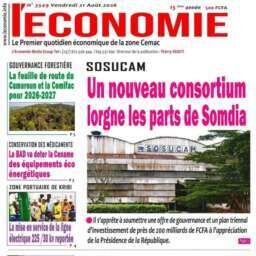
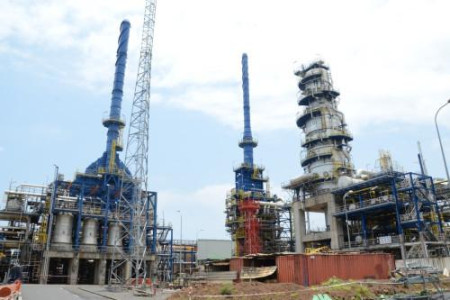
This is the case for Sonara’s rehabilitation. Since the 2019 fire, the start of repair work has been announced repeatedly without material progress. During a board meeting held on December 23, 2025, in Yaoundé, the company approved a budget of CFA291.9 billion for the Acceleration Plan for Restructuring and Rehabilitation Measures aimed at restoring refining operations within 24 months under the Parras 24 program. Implementation has yet to begin.
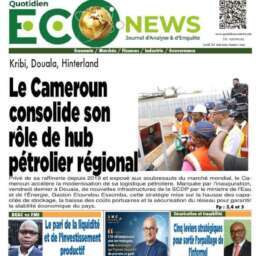
In the meantime, another project offers a possible alternative. On July 17, 2025, Cstar Petroleum—a project company backed by the National Hydrocarbons Company (SNH), Tradex, and Ariana Energy—launched construction in Kribi of a crude oil refinery with a capacity of 30,000 barrels per day, scheduled to begin operations in 2027. The project also includes a fuel storage terminal with a capacity of about 250,000 cubic meters, expandable to 300,000 cubic meters. According to official sources, Cstar has set a “pre-production” schedule that targets output of 10,000 barrels per day starting in the second half of 2026, which could cover about 22% of national demand for diesel and gasoline.
On fertilizer production, several projects have also been pending for more than a decade. These include a plant planned by Germany’s Ferrostaal in Limbe in the Southwest region; projects announced by Vision Global to build two chemical and organic fertilizer plants in Limbe and Yaoundé; and a government project for a fertilizer plant in Douala, announced in 2023 before the National Assembly by then-acting Industry Minister Fuh Calistus Gentry.
BRM

