































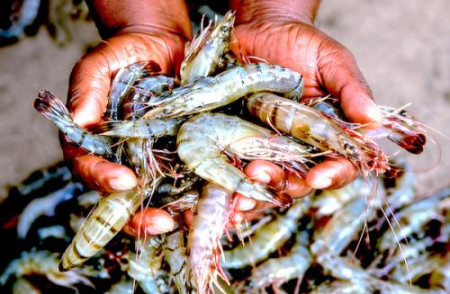
Cameroon’s shrimp sector is working to regain access to European markets, which have been closed since 2009 due to failures to meet sanitary standards. To support this effort, industry stakeholders are turning to the Pasteur Center of Cameroon to help upgrade health and safety practices across the entire value chain.
The initiative is led by FISH4ACP, with support from the Food and Agriculture Organization (FAO). It aims to restore confidence in Cameroon’s sanitary control system, a key requirement for reentering premium markets such as the European Union and the United States, both of which remain closed to Cameroonian shrimp exports.
The Pasteur Center has been tasked with developing a comprehensive guide outlining the requirements for meeting international sanitary standards. The goal is to strengthen oversight at every stage of the chain—from fishing and handling to processing, storage, and export.
At each step, the focus is on reducing biological, chemical, and physical risks that could compromise product quality. The broader objective is to demonstrate that Cameroon can supply shrimp that meets the strict standards required by major importing markets.
A CFA26 billion sector weakened by structural gaps
The economic stakes are significant. A 2026 study by FISH4ACP, the German cooperation, the European Union, and the Pasteur Center estimates the sector’s value at $47 million, or about CFA26 billion. It supports more than 11,000 direct jobs, including fishermen, traders, and processors.
The industry includes over 4,000 fishermen operating across nearly 1,200 landing sites, along with around 100 processing units and more than 200 operators. About ten companies are involved in exports.
Despite this base, the sector faces serious logistical and sanitary shortcomings. The same study found that all observed sites show breaks in the cold chain. Specifically, 88% of fishermen lack access to ice, 89% of operators report losses before landing, and 75% of transporters have no preservation systems.
As a result, visible discoloration was observed in shrimp across all landing sites. These inefficiencies are costly, with annual losses estimated at nearly CFA4 billion.
A high-stakes return to premium markets
Despite these challenges, the sector retains strengths. The study highlights the quality of Cameroonian shrimp, particularly its size and recognized taste. Artisanal production is estimated at about 6,002 tons per year, maintaining a strong presence in domestic and regional markets.
Currently, around 80% of production is consumed locally. The remainder is exported to markets such as China, Malaysia, Vietnam, Nigeria, Gabon, Chad, and the Central African Republic.
A return to European and U.S. markets would mark a major shift. Beyond opening new outlets, it would allow Cameroon to reposition its shrimp exports in higher-value segments. In this context, the sanitary reforms underway go beyond compliance—they are central to restoring the sector’s competitiveness in global markets.
Ludovic Amara

