





















(Business in Cameroon) – Cameroon President Paul Biya on Monday approved funding agreements worth a total of 165.5 billion CFA francs (about $270 million) to modernize the country’s infrastructure, agribusiness, and energy sectors. The decrees ratified a loan from the Islamic Development Bank (IsDB) and authorized the Minister of Economy to sign new agreements with Standard Chartered Bank of London and Deutsche Bank of Spain.
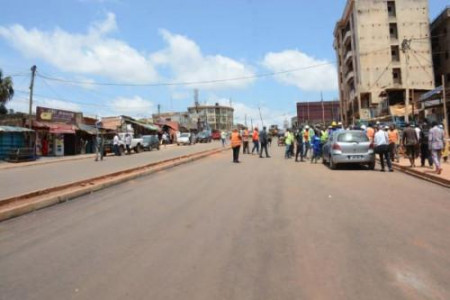
The IsDB loan, worth 107.4 billion CFA francs (163.68 million euros), will fund the construction of the Ngati-Fébadi-Likok road section. The project, which represents Phase II of a key corridor connecting the Batchenga and Ngaoundéré regions, aims to improve access to Cameroon’s Center and North regions, boost connectivity, and stimulate economic trade.
The government also received authorization to borrow 51.7 billion CFA francs from Standard Chartered Bank. The funding consists of a 47.06 billion CFA francs buyer’s credit (71.75 million euros), guaranteed by BPI France, and a 4.67 billion CFA francs commercial credit (7.12 million euros). These funds are intended to revive the industrial capacity of the Cameroon Development Corporation (CDC), the country’s largest agribusiness, which specializes in bananas and rubber.
The CDC, weakened by the sociopolitical crisis in the Anglophone regions since 2018 and facing internal challenges, incurred losses of 38.7 billion CFA francs between 2019 and 2021 and drastically reduced its workforce. The government hopes the new resources will restore the company’s competitiveness and preserve thousands of jobs.
The third loan, for 7.3 billion CFA francs (11.08 million euros) from Deutsche Bank Spain, will fund Phase I of the PLANUT project. The project consists of a 6.47 billion CFA francs buyer’s credit and a 793 million CFA francs commercial credit to stabilize and strengthen power transmission lines in Yaoundé. The goal is to reduce recurring power outages, limit technical losses, and improve residents’ quality of life while supporting economic activity.
While the loans are part of a development-oriented strategy to modernize infrastructure and stimulate the economy, they also fuel an ongoing debate about public debt sustainability. The International Monetary Fund (IMF) recently warned the country about its debt level, which remains classified as a high risk for debt distress, despite being considered manageable at this stage.
As of June 30, 2025, Cameroon’s public debt stood at 14.105 trillion CFA francs, or 43% of GDP. The debt decreased by 1.1% on a monthly basis and 3.3% quarterly, but it increased by 1.8% over the past year. The debt structure shows a heavy concentration in central government (93%), while state-owned enterprises hold 6.8% and decentralized local authorities hold only 0.2%.

