



















Algeria’s state-owned Madar Holding explores new coffee supply agreements in Cameroon as it seeks to expand an existing trade flow between the two countries.
Madar Chief Executive Officer Adel Khemane held meetings in Douala on July 9, 2026, with Cameroon’s National Cocoa and Coffee Board and the Cocoa and Coffee Interprofessional Council.
The discussions focused on identifying suppliers and examining the terms of possible commercial agreements for the Algerian market. No volumes, prices, contract values, or delivery schedules were disclosed, meaning the initiative remains a commercial prospecting effort rather than a firm purchase commitment.
The meetings followed talks held a day earlier in Yaoundé with Trade Minister Luc Magloire Mbarga Atangana. During that meeting, Khemane said Madar was looking for partners to expand its imports of Cameroonian coffee.
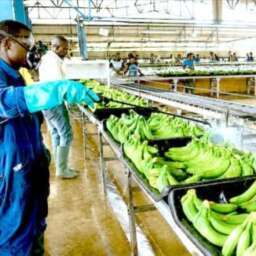
The group is also interested in bananas and is assessing possible investments in several agricultural value chains.
An existing market for Cameroonian coffee
Algeria is not a new destination for Cameroonian coffee. Between 2020 and 2022, Cameroon exported about CFA8.8 billion worth of coffee to the North African country.
Coffee accounted for 79.5% of the value of Cameroon’s exports to Algeria during that period. In 2023, Cameroon’s total exports to Algeria across all product categories reached about CFA7.7 billion, according to the National Institute of Statistics.
Madar’s mission may therefore be less about opening a new market than formalizing and expanding an already established trade relationship. Regular contracts could define volumes, quality requirements, prices, delivery frequency, and logistical responsibilities, giving both suppliers and buyers greater visibility.
The exact type of coffee Madar is seeking remains unclear. The group has not said whether it is interested in robusta, arabica, green coffee beans, or processed products.
It has also not specified whether it plans to deal directly with Cameroonian exporters or work through intermediaries.
Cocoa talks remain preliminary
The meetings with the two industry bodies also included presentations on Cameroon’s cocoa production capacity and discussions about possible sourcing or investment opportunities.
However, Madar has not disclosed any specific demand for cocoa beans or processed cocoa products. Its interest in cocoa therefore appears less advanced than its plans for coffee. Without volumes, technical specifications, or an identified industrial project, it would be premature to describe the Algerian group as a future buyer of Cameroonian cocoa.
Institutional meetings are generally only an initial step before direct negotiations between companies, supplier audits, and the signing of commercial contracts.
Earlier cocoa agreement has yet to generate visible trade
Madar’s visit follows an earlier attempt to strengthen trade between Cameroonian and Algerian companies in processed cocoa products. On September 11, 2025, Cameroon’s Nohi Chocolateries and Algerian industrial company Technocast signed a memorandum of understanding on the sidelines of the fourth Intra-African Trade Fair.
The agreement covered possible exports to Algeria of eating chocolate, baking chocolate, pastry chocolate, and other food products. It also provided for Technocast to supply inputs to the Cameroonian company.
No volumes, contract values, or implementation results have since been disclosed. The memorandum therefore demonstrates an intention to cooperate but does not yet confirm the existence of regular chocolate trade between the two countries.
The agreement nevertheless shows that bilateral opportunities may extend beyond raw materials to semi-processed and finished products, provided Cameroonian companies can meet Algerian requirements on volume, quality, packaging, and delivery times.
No investment project identified
Madar has also said it is examining investment opportunities in Cameroon, but it has not identified specific projects, potential investment amounts, or a timetable.
There is therefore no evidence at this stage that the mission is tied to a defined coffee- or cocoa-processing project in Cameroon. Any such investment would require further details on the targeted market segment, industrial capacity, land requirements, supply sources, and commercial outlets.
The talks come ahead of the fifth session of the Cameroon-Algeria Joint Commission for Economic Cooperation, which is expected to take place in Yaoundé. About 10 agreements are reportedly under preparation as the two countries seek to deepen economic ties.
The significance of Madar’s visit will ultimately depend on whether the discussions lead to contracts specifying the products involved, volumes, prices, quality standards, and delivery schedules.
Until then, the initiative remains exploratory. It nevertheless confirms that an Algerian state-owned group is looking to structure its sourcing in a Cameroonian market where a commercial relationship already exists.
Frédéric Nonos

