






























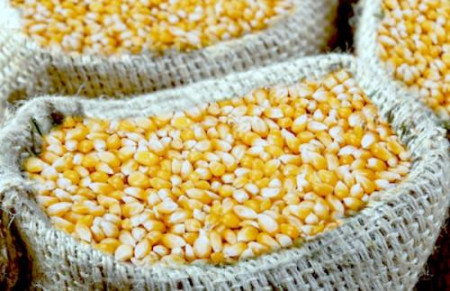
Cameroon’s trade minister has called for a suspension of corn imports after local producers complained that they are struggling to sell their harvests despite strong demand from industrial buyers.
In a letter sent May 8 to Agriculture Minister Gabriel Mbairobe, Trade Minister Luc Magloire Mbarga Atangana urged the government to halt new corn import permits and suspend imports already authorized.
The proposal followed an interministerial meeting chaired May 7 by Prime Minister Joseph Dion Ngute, where officials discussed what the government described as massive corn imports occurring alongside weak sales of locally produced grain.
Mbarga Atangana said the measures would help local farmers sell existing stocks.
The minister specifically asked the Agriculture Ministry to suspend the issuance of import permits and temporarily freeze the use of permits already granted.
Corn Imports Keep Rising
The debate comes despite years of government policies aimed at boosting domestic corn production.
In 2021, beverage group Castel launched a CFA18 billion corn processing plant tied to a support program for local farmers designed to increase production.
Cameroon’s corn imports have risen sharply since 2023. According to the National Institute of Statistics, corn imports jumped 229% that year to nearly 40,000 tons, representing spending of CFA7.8 billion.
Imports rose further afterward, reaching 81,233 tons in 2024 for more than CFA11 billion before easing slightly to 72,586 tons in 2025, with import spending totaling CFA10.2 billion.
Imported Corn Remains Cheaper
Industry operators say imported corn remains more attractive to manufacturers because of lower prices.
Commodity market data showed imported corn traded between €200 and €234 per ton in May 2026, equivalent to roughly CFA131,000 to CFA155,000.
By comparison, locally produced corn sold between CFA140,000 and CFA255,000 per ton depending on location, quality and season, according to Agriculture Ministry data.
Sector operators say the price gap reflects low agricultural productivity in Cameroon, where many farmers still have limited access to quality seeds.
Official figures show average corn yields reached only 1.8 tons per hectare in 2023. That remains far below the global average of 5.9 tons per hectare and well under South Africa’s 6.4 tons per hectare.
Low productivity has pushed production costs higher. Industry estimates place production costs at roughly CFA428,000 per hectare in Cameroon, above levels seen in Europe and the Americas, where farmers also benefit from government subsidies.
Brice R. Mbodiam

