
























Cameroon’s customs authority says a new system for collecting duties on mobile phones is already reshaping imports, with 29,000 devices declared between April 1 and April 17, 2026.
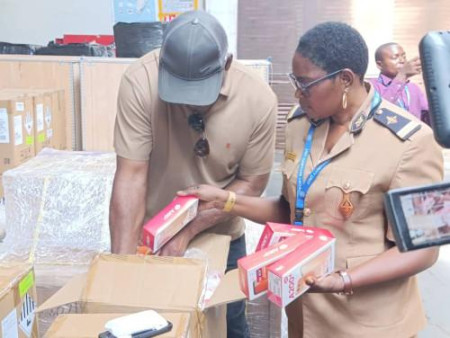
The figure was disclosed on April 22 at Yaoundé-Nsimalen International Airport during a presentation on the rollout of the new revenue collection mechanism, which now applies to mobile phones and other digital devices.
Officials say the reform is driving a sharp shift away from informal channels. Henri Bozard Toutou, head of the main customs office at Nsimalen airport, said importers have begun returning to formal clearance procedures after years of relying on smuggling routes.
“For a long time, airports saw very few phone imports because of smuggling,” he said. “By effectively moving the border from land crossings to a digital checkpoint, the new system has reduced illegal trade to minimal levels.”
As of April 22, about 10,000 phones were still being processed at the Nsimalen customs warehouse. Among them were roughly 1,200 devices belonging to Adamou Ali, an importer with three decades of experience in the sector. He said the reform could help reduce smuggling but warned that current pricing could push up retail costs.
“The fees are a bit high, and that could affect the final consumer,” he said, adding that importers are asking the government to review the rates.
Customs officials reject that argument. The reform does not introduce any new taxes, they say, but changes how duties are collected. They also note that the assessed value of phones has been cut in half and then reduced by an additional 50%, in line with provisions in the 2023 finance law.
Under the new system, only devices that have been properly cleared through customs will be allowed to connect to networks operated by licensed telecom providers in Cameroon. Authorities say this measure is central to enforcing compliance and closing off the market to smuggled devices.
The government expects the reform to significantly boost revenue. Annual collections from mobile phones and similar devices are projected to reach at least CFA25 billion, up from around CFA1.3 billion currently.
BRM

