




























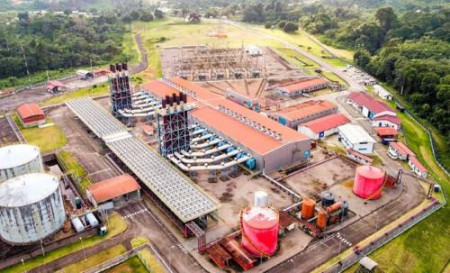
(Business in Cameroon) – Independent power producer Globeleq is preparing to exit Cameroon after 11 years, with discussions underway for the gradual transfer of its assets to local operators, the Minister of Water and Energy, Gaston Eloundou Essomba, confirmed.
Essomba, who chairs the boards of directors for two Globeleq subsidiaries in Cameroon, Kribi Power Development Company (KPDC) and Dibamba Power Development Company (DPDC), discussed the plan during the national workshop on Cameroon’s Energy Compact on September 10, 2025.
Sources familiar with the matter indicate the ongoing negotiations involve a commitment from prospective buyers to make massive investment commitments to ensure the continuity and performance of the national power generation park. An internal memo signed by Frédéric Didier Mvondo, head of Globeleq Cameroon, and addressed to staff, confirmed the British group is in talks with several local players to sell its assets.
“Several companies have expressed interest in the Kribi and Dibamba power plants. This time, the procedures are taking place at the local level, and our teams are actively participating in discussions with the various prospects,” Mvondo wrote. A dedicated corporate team has been established to oversee the process.
This pivot to local actors follows a previous unsuccessful attempt to sell the assets to international investors. Sources confirmed that Saudi company Aqua Power had recently considered acquiring a majority stake in Globeleq, but negotiations did not materialize.
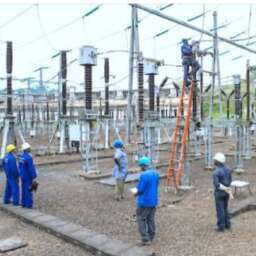
Globeleq operates the 216 MW Kribi gas-fired plant and the 88 MW Dibamba heavy-fuel oil plant, which together represent its main assets in the country. These two plants supply about 20% of the national electricity demand, serving nearly 990,600 consumers in 2023, according to a company report.
However, the deterioration of the power sector over the past five years has severely impacted the group’s profitability. “Over the past five years, the situation in the sector has significantly worsened, putting pressure on the performance of Kribi and Dibamba,” acknowledged a company official.
As a result, Globeleq has reclassified its Cameroonian assets into the “Yield Co” category, indicating they are available for sale, in contrast to its sites in East and Southern Africa, which are maintained in the “Growth Co” category for long-term retention.
Internal Globeleq sources noted the difficulties are not unique to Cameroon, citing similar payment delays in Côte d’Ivoire and Tanzania. Tanzania recently secured an acquisition deal between Globeleq and a local private partner, paving the way for the company’s exit from that market.
The fragility of Cameroon’s electricity sector was highlighted by the prolonged shutdown of the Kribi and Dibamba plants between September 2024 and February 2025 due to 137 billion CFA francs (about 210 million euros) in unpaid debts owed by Eneo, the national utility. Production only resumed after a partial debt payment. These chronic payment issues continued to weaken Globeleq’s cash flow and profitability in the country.
As Globeleq prepares to leave, at the same time as the majority Eneo shareholder, British fund Actis, the power producer cited operational performance improvements, the full repayment of loans for Kribi and Dibamba, and the payment of better-than-expected dividends as key accomplishments.
The decision ultimately reflects Globeleq’s strategic repositioning towards what it considers more stable markets with higher growth potential, such as East and Southern Africa.
Amina Malloum

