




















-
Only 3,000 of the 200,000 hectares secured by the government have entered the development phase.
-
The slow rollout suggests that land access alone has not sparked large-scale agricultural investment.
-
Financing, infrastructure and local concerns could continue to slow the project’s expansion.
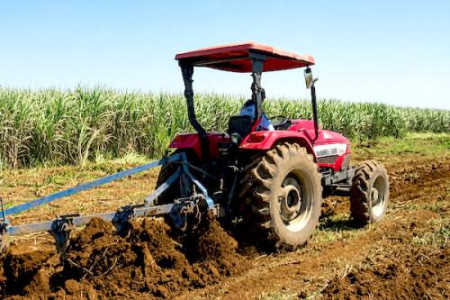
Cameroon has begun developing only 3,000 hectares of the 200,000 hectares of land it secured for large-scale farming, highlighting the challenge of turning land availability into private investment.
The figure, disclosed in the government’s 2027-2029 Medium-Term Economic and Budget Programming Document (DPEB), means operational development has started on just 1.5% of the land earmarked to increase domestic production of rice, maize, wheat and other food crops under the country’s Integrated Agropastoral and Fisheries Import Substitution Plan (PIISAH).
Presented to Parliament on July 3 by Finance Minister Louis Paul Motaze, the document states that private agro-industrial operators have begun developing an initial 3,000-hectare site within the 200,000-hectare land reserve.
However, the government does not say the entire area is already under cultivation. Instead, it notes that development has begun. The report also provides no details on the investors involved, the size of their investments, the crops they plan to grow or the timeline for developing the remaining 197,000 hectares.
The limited progress does not necessarily indicate that investors have rejected the project. It does suggest, however, that securing legal access to land—long presented as one of the main barriers to agricultural investment—has yet to trigger large-scale agro-industrial development.
Land Is Available, but Investment Has Been Slow
The land reserve stretches across the Yoko-Lena-Tibati corridor between the Centre and Adamawa regions. It represents the first half of the government’s target to secure 400,000 hectares for major agricultural and livestock projects.
The initiative aims to reduce Cameroon’s dependence on food imports, ease pressure on foreign exchange reserves and meet rising demand from households, food processors, livestock producers and aquaculture businesses.
The government also sees the project as a way to shift from an agricultural sector dominated by small family farms toward larger, more productive commercial operations.
Speaking in May 2023, Agriculture Minister Gabriel Mbairobe said about 90% of the country’s agricultural output comes from family farms, but growing demand requires the emergence of medium- and large-scale farms capable of delivering higher productivity.
The early results suggest that while secure land tenure is an important prerequisite, it is not enough on its own to attract large-scale agricultural investment.
Other Obstacles Remain
The Finance Ministry does not explain why development has so far been limited to 3,000 hectares. As a result, it is unclear whether the slow start reflects a lack of investor interest, lengthy land allocation procedures, financing constraints or simply the project’s implementation schedule.
Other factors could also be slowing investment, including limited bank financing for food crop projects, the high cost of equipment and agricultural inputs, inadequate access to water and electricity, poor transport infrastructure and administrative delays. The DPEB, however, provides no evidence indicating which of these factors has had the greatest impact.
Land availability also remains a sensitive issue. During a government mission along the Batchenga-Ntui-Yoko-Tibati-Ngaoundéré corridor in July 2024, local communities raised concerns about the way the land reserves were established. Residents called for greater consultation, revisions to land titles to better protect community rights, lower allocations to agro-industrial projects in some areas, improved compensation and stronger safeguards for communities that could be displaced.
Similar disputes have affected previous agricultural projects. In 2021, Prime Minister Joseph Dion Ngute canceled a 2016 decree establishing more than 66,000 hectares of land reserves in the Ntem Valley after local opposition to a 26,000-hectare lease granted to Neo Industry for cocoa production.
The Central Plains project therefore represents a broader test of Cameroon’s agricultural strategy. Its success will depend not only on securing land, but also on converting those land reserves into productive farms that are adequately financed, properly equipped and broadly accepted by local communities.
Brice R. Mbodiam

