

























The Center for Environment and Development (CED) and NGO Fern published a study on Jan. 29 examining the role of women, including Indigenous women, in Cameroon’s cocoa sector.
The research, carried out in ten localities across the Centre, South and East regions, highlights a paradox: women form a key part of the workforce but remain largely excluded from land ownership, cooperative leadership and control over income.
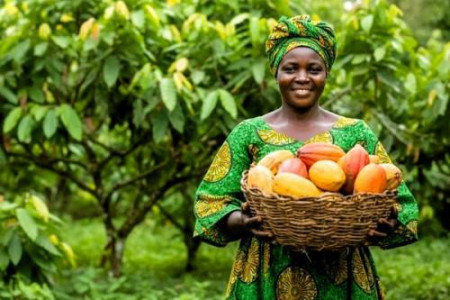
Women take part in most stages of production, including land preparation, plantation maintenance, harvesting, pod splitting, processing and labour organisation. Yet they are often absent from land registries, cooperative decision-making bodies, commercial contracts and, above all, from the sharing of earnings.
CED and Fern estimate that even when women do most of the work, they typically receive only 20% to 30% of cocoa income, generally used to cover household expenses. Decisions on investment, asset-building and cooperative participation remain largely in the hands of men.
Land tenure insecurity
The study points to widespread insecurity over land rights, affecting women most sharply. Of the 191 female producers surveyed, only 13% said they held a land title, while 38% reported having no documents proving ownership of the plots they farm.
Overall, the report concludes that 87% of women producers lack secure land tenure. In many cases, access depends on family or customary arrangements that can easily be challenged by disputes, inheritance issues or land sales.
The document also highlights the situation of Indigenous women, particularly the Baka, who face compounded marginalisation both as women and as Indigenous people, placing them at the bottom of the social and economic hierarchy. The study says they often work on plantations owned by others, with little or no control over their income and greater exposure to violence and discrimination.
Another finding is that cocoa production is increasingly carried out by women, especially those aged 25 to 45. The report describes this group as the main driving force of the sector in the areas studied, including on plantations they do not own. Some women are also directly managing larger planted areas, while continuing to shoulder most domestic responsibilities.
EUDR: Limited awareness among women producers
The publication comes as access to the European market is being reshaped by new rules. The report notes that the European Union Deforestation Regulation (EUDR), which requires plot-level traceability and compliance, has been delayed.
In the villages surveyed, awareness of the EUDR remains low. Among the women questioned, 68% said they had never heard of it. Those who had often associated it with a general call to protect forests, without understanding specific obligations such as geolocation, proof of legal land use and risk-management requirements.
The authors warn that without support measures, these rules could increase pressure on the most vulnerable actors in the supply chain, particularly women with limited access to land and information.
The report recommends securing women’s land rights, improving access to training and information, supporting female-led agricultural entrepreneurship and strengthening women’s representation in decision-making bodies.
Thierry Christophe Yamb
