










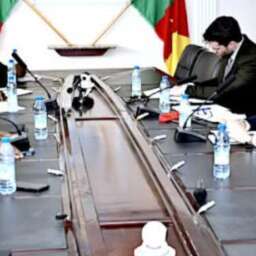
















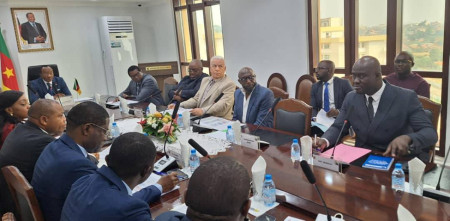
Cameroon’s Minister of Public Works, Emmanuel Nganou Djoumessi, chaired a meeting with project stakeholders on 4 March 2026 to clear the final administrative and technical hurdles ahead of the expected signing of a €198.8 million (about CFA francs 130.4 billion) financing agreement for the Ebolowa-Akom II-Kribi road. Works on the ground are expected to begin between March and April 2026.
The meeting, held both in person and by videoconference, reviewed the remaining obstacles before the agreement enters into force and the contractor can fully take possession of the site.
According to the Ministry of Public Works, discussions focused on completing expropriation and compensation procedures for affected residents, aligning project documentation with the technical partner’s requirements, finalising the effectiveness of the financing agreement and securing the release of rights of way. Participants also examined measures to maintain traffic along the corridor ahead of heavy works. Several sensitive sections were identified, prompting instructions to ensure continuity of circulation and avoid disruption.
The meeting follows a non-objection notice issued on 18 December 2025 by the loan insurer’s credit committee, authorising the signing of the financing agreement and clearing key environmental constraints, officials said.
They added that the company in charge of the works has already initiated preparatory operations, including sourcing materials, prefabricating certain technical components and scheduling complementary studies.
During the meeting, Djoumessi called for tighter control of expenditure linked to site installations so that the bulk of resources is directed toward physical construction. He urged all stakeholders to move quickly to meet the planned timetable.
At the end of the consultation, participants adopted an updated schedule of priority actions. The Ebolowa-Akom II-Kribi road project aims to strengthen connectivity between Cameroon’s South Region and the port city of Kribi, facilitating the movement of goods and passengers along a strategic economic corridor.
Mercy Fosoh
