






























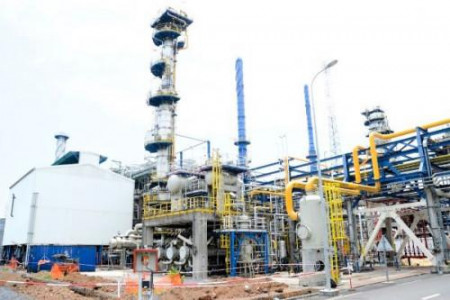
The board of Cameroon’s National Refining Company (Sonara) has approved a budget of CFA291.9 billion for the rehabilitation of the Limbe refinery, slightly below the CFA300 billion envelope previously announced by the government. The decision was adopted during the company’s 140th board meeting, held on December 23, 2025, in Yaoundé, under the chairmanship of Dr. Ndoh Bertha née Bakata.
The rehabilitation program, officially known as the Acceleration Plan for Restructuring and Rehabilitation Measures to Resume Refining Within 24 Months (Parras 24), had initially been costed at CFA300 billion. That figure was disclosed on November 26, 2025, by Prime Minister Joseph Dion Nguté during the presentation of the government’s 2026 economic, financial, social, and cultural program before the National Assembly. The estimate was based on a detailed feasibility study conducted by French engineering firm Axens and already represented a sharp increase from the CFA250 billion previously cited by public authorities, without detailed explanation at the time.
Even after the downward revision, the approved budget remains well above early estimates made between 2020 and 2021, which ranged from CFA111 billion to CFA278 billion. The higher cost reflects several factors, including price updates over more than five years, an expanded scope of works covering the rehabilitation of units 15, 255, and 225, upgrades to selected storage tanks, and the implementation of a dedicated power supply strategy. This electricity component is considered essential to completing the first phase of the “Sonara 2010” modernization project, which was underway when the refinery was damaged by fire in 2019.
More favorable technical assessments
The lower budget adopted by the board appears to be supported by updated technical diagnostics released by Sonara. These assessments indicate that at least 75% of equipment in the damaged zone can be reused, while 8% must be dismantled or scrapped. A further 17% could potentially be recovered, subject to more detailed technical inspections. Equipment located in non-affected areas is generally considered to be in acceptable condition. These findings likely allowed for a more targeted definition of the rehabilitation works and tighter cost control.
Six years after the fire that shut down the country’s only refinery, the Cameroonian state has now defined a clear recovery path for Sonara, with a longer-term objective of doubling refining capacity from 3.5 million to 7 million tons of crude oil per year. The first phase of the plan, scheduled to run from January 2026 to December 2027, is the core of Parras 24 and aims to restore the refinery to its operational configuration as of May 2019. An audit carried out by engineering firm Ekium concluded that a significant share of the damaged equipment remains technically recoverable.
Amina Malloum
