

























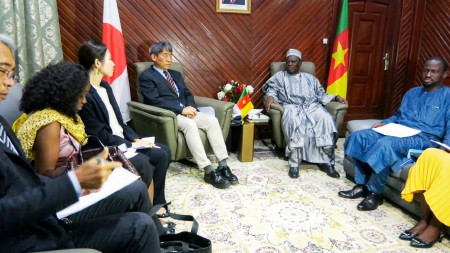
(Business in Cameroon) – Cameroon’s push to reduce its exposure to global food markets has reached a decisive juncture. With rice imports costing the national treasury an estimated 320 billion FCFA in 2024, officials met in Yaoundé on Tuesday, December 9, to review the progress of the Rice Development Project (PRODERIP).
During the mid-term review with Hiroshi Hiraoka of the Japan International Cooperation Agency (JICA), Agriculture Minister Gabriel Mbairobe confirmed that the focus must shift from simple cultivation to bridging the structural gap between a national demand of 650,000 tonnes and a commercialised local supply that currently stagnates around 150,000 tonnes.
Phase three of the project, which began in 2023, is now prioritising economic competitiveness over the next two years. Following field assessments conducted since November 13, JICA experts have identified seed quality and yield efficiency as the primary levers for growth. The project has set clear technical targets: stabilising yields at over 5 tonnes per hectare for irrigated rice and increasing rain-fed (upland) rice yields to 2.5 tonnes per hectare. However, the core strategy now emphasises “varietal purification” to ensure grain homogeneity, a key factor in competing with standardised rice imported from Thailand and India.
Beyond agronomy, the review highlighted critical deficiencies in the post-harvest value chain. The joint report notes that locally produced rice often has lower market appeal due to inadequate drying and milling. This lack of industrial processing capacity not only deters urban consumers but also facilitates the informal outflow of unprocessed paddy rice to neighbouring Nigeria, where processing infrastructure is more advanced. Consequently, the project is redirecting efforts toward strengthening partnerships with private-sector operators to upgrade industrial equipment, ensuring that local production can be processed to international standards within Cameroon.
These operational adjustments align with the aggressive targets set out in the government’s Medium-Term Economic and Budgetary Framework. Authorities aim to increase national production to 460,000 tonnes by 2027, with a long-term goal of 750,000 tonnes by 2030. Achieving these figures will require a substantial expansion of cultivated land and a sustained improvement in the sector’s industrial capacity to effectively reverse the country’s trade deficit in basic food commodities.
By Mercy Fosoh, Edited by Idriss Linge
