
























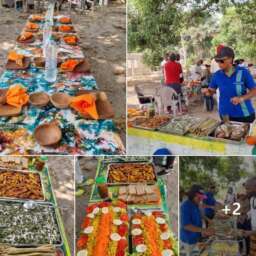





(Business in Cameroon) – Cameroon is intensifying efforts to reduce its FCFA 178 billion annual wheat import bill by promoting the use of local flours in bakeries and pastry production. The Support Service for Local Development Initiatives (SAILD) and the Citizen Association for the Defence of Collective Interests (ACDIC) officially launched a project titled “Strengthening Artisanal Bakeries Incorporating Local Flours in the Production of Bread and Pastries in Cameroon” during a workshop held recently in Yaounde. The event brought together bakers, pastry chefs, financiers, and industry stakeholders to discuss new strategies for integrating cassava and potato flours into bread and pastry recipes.
According to a report from Business in Cameroon,Cameroon imported around 887,400 tonnes of wheat flour in 2023, representing a financial outlay of FCFA 178.3 billion. In comparison, total production of local flours derived from cassava, yam, maize, and plantain was estimated at just 12,800 tonnes in 2024, an imbalance that exposes the country’s bakery sector to price volatility and global supply disruptions.
To address this, the Cameroonian government has introduced fiscal measures and product standards designed to foster substitution. Since 1 January 2025, locally produced flours have been exempted from Value Added Tax, lowering their retail price by approximately 19.25%, while bread production standards have been revised to allow up to 15% substitution of wheat flour with starch-based alternatives such as cassava and yam.
The SAILD-ACDIC project is being implemented under the framework of the import-substitution policy introduced by the government in 2021. The initiative is financed to the tune of US $120,000 (about FCFA 67.4 million) and aims to build the capacity of small-scale bakers and pastry producers to adopt local flours through technical training, access to processing equipment, and awareness of industry standards.
According to figures published by Cameroon Tribune, cassava production stood at 6.27 million tonnes in 2022, making it one of the country’s most abundant crops. The National Development Strategy 2020-2030 (NDS30) targets a production level of 10 million tonnes annually by 2030, alongside yield improvements from 15 to 30 tonnes per hectare, driven by input support and mechanisation.
Government projections indicate a broader policy shift across the cereal value chain. A five-year national plan (2024–2028), valued at FCFA 417 billion(US $698 million), seeks to boost both wheat and local flour production capacities to reduce wheat imports by 35 percent by 2028, as noted in the Ministry of Finance 2024 economic report. This programme also encourages the establishment of small-scale processing units for yam, cassava, maize, and plantain, aimed at achieving greater flour diversity and quality consistency.
Recent agricultural data from the Food and Agriculture Organization (FAO 2024) confirms that Cameroon ranks among the top 15 cassava producers globally, with steady growth in root crop output over the past decade. The country also produces over 300,000 tonnes of Irish potatoes and 200,000 tonnes of plantain annually, according to the National Institute of Statistics.
According to SAILD, Cameroon has an abundance of raw materials for local flour processing, though industrial-scale conversion remains limited. The local flour initiative comes as several bakeries in Yaounde, Douala, and Bafoussam begin small-scale trials to integrate cassava and plantain flour into bread and biscuit production. Participants at the launch event agreed that the move would improve product diversity and standardisation within artisanal bakeries. The project is expected to run until 2026 and aims to establish certified supply chains for cassava-based flours while strengthening collaboration between farmers, processors, and bakers.
Mercy Fosoh
Lire aussi:
