




















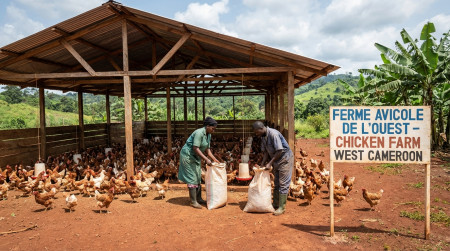
Cameroon has reached a key milestone in its import-substitution drive, with the country no longer importing chicken and pork, according to the Minister of Livestock, Fisheries and Animal Industries, Dr Taïga. The announcement was made during the opening of the ministry’s annual conference of central and devolved services in Yaoundé on 27 January 2026.
Dr Taïga said Cameroon has stopped spending foreign currency on the importation of animal products such as chicken and pork cuts, with only limited volumes of processed items still entering the market. He described 2026 as a year of consolidation, pointing to the effectiveness of the import-substitution strategy implemented across the sector.
Addressing participants at the opening session, the minister said the results achieved in 2025 reflected the successful execution of the policy. “Cameroon no longer imports chicken cuts, and we no longer import pork cuts, apart from a few processed products,” he said, adding that foreign-exchange outflows linked to these products have been significantly reduced. He attributed the progress to close coordination between public authorities and private-sector operators, while stressing that sustaining the gains would require scaling up aquaculture, improving production techniques and expanding continuous training for producers.
To support these efforts, the government has allocated FCFA 12.5 billion in 2026 for projects aimed at boosting productivity and strengthening the development of livestock, fisheries and animal production. The funding is expected to modernise training centres, reinforce incubation hubs and establish a reliable statistical system to monitor production, processing and trade. MINEPIA officials noted that enhanced data collection has been identified as a central priority to improve planning, monitoring and decision-making, particularly as domestic output increasingly replaces imports.
Data from the National Institute of Statistics (NIS) show that the livestock and fisheries sector contributed 4.8 per cent to Cameroon’s gross domestic product in 2025 and accounted for an equivalent share of national economic growth, underscoring its importance to the wider economy. During the conference, participants reviewed progress under the National Integrated Import-Substitution Plan and examined performance reports of ministerial programmes. Workshops focused on strengthening the statistical information system and consolidating import substitution in fish and milk production.
Looking ahead to 2026, MINEPIA has prioritised increasing fish and milk output, expanding youth training and incubation programmes, and ensuring that productivity gains translate into measurable economic outcomes, ministry officials said.
Mercy Fosoh
