
















Cameroon has recorded significant progress in restoring stability and supporting economic recovery in the Far North region under the Regional Stabilisation Facility (RSF) for the Lake Chad Basin. Implemented with support from the United Nations Development Programme (UNDP), the initiative aims to strengthen security, rebuild public infrastructure and revive local economies in communities affected by insecurity and climate-related pressures in the Lake Chad Basin.
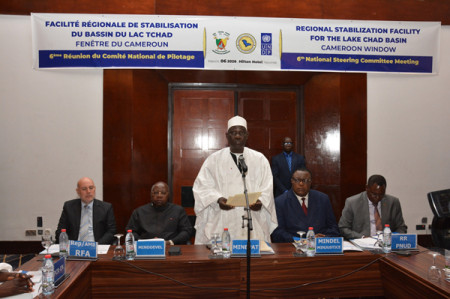
The progress was reported by the Cameroon window of the Regional Stabilisation Facility for the Lake Chad Basin during its sixth national steering committee meeting last Saturday.
According to the committee, measurable gains have been recorded in restoring public authority and strengthening security systems across several localities in the Far North. Since the project began, 78 security and justice facilities have been constructed, rehabilitated or equipped, the committee said. Training has also been provided to 4,935 members of security forces and human rights actors on international humanitarian law, civil protection and the prevention of gender-based violence. In addition, 1,812 judicial police officers have been trained in criminal procedures adapted to crisis contexts.
Community-based conflict prevention mechanisms have also been reinforced through the establishment of 16 peace and stabilisation committees. A total of 5,002 members of local vigilance groups received training aimed at strengthening early warning mechanisms. The programme also supplied 276 vehicles, including four-wheel-drive pick-ups and motorcycles, to improve the mobility and operational capacity of security services operating in the region.
Economic support and livelihoods
Alongside security measures, the initiative has prioritised economic recovery and income-generating activities for local communities. A total of 5,566 farmers and aquaculture producers were trained in improved agricultural techniques, while 5,093 producers received agricultural kits.
Authorities also distributed 394 tricycles to community groups to facilitate small-scale transport and trade activities, while eight tractors were delivered to departmental delegations of agriculture and rural development to support mechanised farming.
Women’s economic participation has also been promoted through capacity-building initiatives. Under the programme, 316 women received training in leadership, gender equality promotion, economic empowerment and advocacy.
The programme has also financed social infrastructure aimed at improving living conditions and supporting local development. Investments include the construction and equipping of 92 classrooms, the rehabilitation or construction of eight health facilities, and the installation of 125 potable water points serving about 50,000 residents. Public infrastructure improvements also include the installation of 540 solar streetlights to enhance security and mobility in local communities.
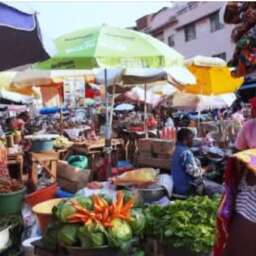
In addition, 70 facilities supporting economic recovery have been developed to strengthen local markets and productive activities in affected communities.
Stakeholders’ reactions
According to UNDP Resident Representative Mathieu Ciowela, the progress recorded shows that coordinated action between the state, development partners and local communities can produce tangible improvements in people’s lives.
The German Ambassador to Cameroon, Christian Sedat, also noted that collaboration among institutions and partners plays a key role in consolidating stability in the Lake Chad Basin region.
Addressing the meeting, Minister Alamine Ousmane Mey said the stabilisation programme contributes to rebuilding public confidence in peace-building initiatives by addressing the concrete challenges faced by communities in the Far North. He also acknowledged the role of defence and security forces in supporting stabilisation and community recovery efforts.
Authorities indicated that the programme will continue in the coming years with additional investments and projects aimed at consolidating previous achievements and expanding economic and social infrastructure in the region.
Mercy Fosoh
Editing: Mouka Mezonlin
