

























- Cstar Petroleum planned a partial startup of the Kribi refinery at 10,000 barrels per day in the second half of 2026.
- The early phase would cover about 22% of Cameroon’s diesel and gasoline demand.
- The plan would accelerate the project timeline compared with an initial June 2028 start date.
Cstar Petroleum, a project company backed by SNH, Tradex, and Ariana Energy, prepared a partial startup scenario for the refinery under construction at the port of Kribi.
Sources cited by Business in Cameroun said the project sponsors presented a “early production” schedule to Cstar’s board in December 2025. The plan targeted a gradual ramp-up to 10,000 barrels per day in the second half of 2026.
A project source said the plan aimed to launch operations at about one-third of the refinery’s final planned capacity of 30,000 barrels per day.
Cstar estimated that this initial output level would meet about 22% of national demand for diesel and gasoline, while construction continued toward full commissioning of all units.
If confirmed, the revised schedule would accelerate the original project timeline.
Project promoters had initially planned commissioning for June 2028, according to information released at the project’s launch.
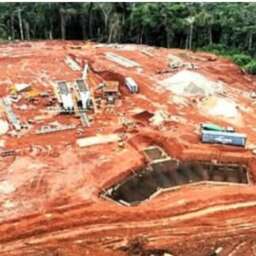
Authorities officially launched the refinery and storage project on July 17, 2025, on a site located within the Kribi port zone.
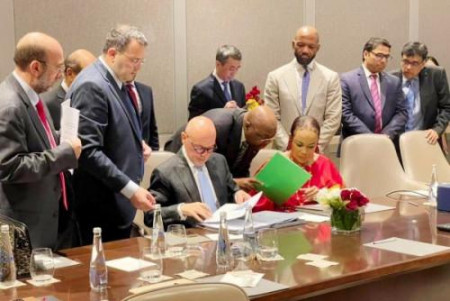
In a recent communication, Cstar said the “operational” phase of construction would begin in January 2026, following a board meeting held on December 6, 2025, in Dubai.
The 250-hectare complex included a refinery with a capacity of 30,000 barrels per day and a fuel storage terminal with initial capacity of about 250,000 cubic meters, expandable to 300,000 cubic meters.
Project sponsors estimated the investment cost at about CFA115 billion, pending final technical studies.
Cstar awarded construction works to a consortium comprising RCG Turnkey Solutions, Global Process Systems (GPS), and Norinco International.
BGFI Cameroon received a mandate to mobilize CFA120 billion and act as lead agent bank for the financing structure.
The project aligned with Cameroon’s stated goal of “energy sovereignty” following the shutdown of the Sonara refinery.
Cameroon recorded annual fuel demand of about 1.9 million metric tons. National storage capacity stood at about 270,000 cubic meters, below an indicative target of about 470,000 cubic meters required for security and commercial stocks.
Projections attributed to project sponsors pointed to a 30% reduction in fuel imports. The same projections forecast annual savings of nearly CFA400 billion and export revenues estimated at CFA141 billion, notably from marine fuels. Sponsors also projected 2,000 direct jobs and 5,000 indirect jobs.
Cstar Petroleum structured the project around two entities: Cstar Tank Farm for the storage terminal and Cstar Refinery for the refining unit.
The company said the complex aimed to substitute imports and could meet nearly 70% of domestic demand once it reached full capacity and added biofuel units.
SNH and its marketer Tradex S.A. created Cstar Petroleum.
Ariana Energy held 49% of the capital, Tradex held 31%, and SNH held 20%.
Ludovic Amara
