


























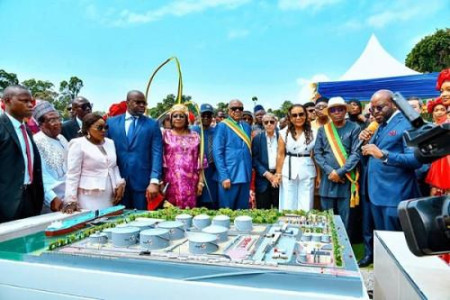
Technical and financial studies have determined the investment required for two projects led by Cstar in Kribi: a refinery and a petroleum storage depot. The refinery is estimated at 372 billion CFA francs, while the oil storage terminal, known as the TankFarm, will require 168 billion CFA francs. Total investment amounts to 540 billion CFA francs.
“The studies have determined the cost of the projects, and the financing structure has been finalized, with each shareholder’s commitment clearly defined,” a source close to the matter said.
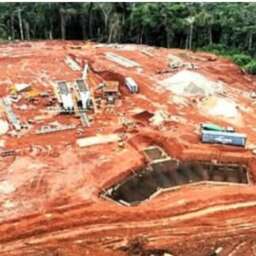
The refinery will be built on a 250-hectare site in the Kribi industrial port zone. It has already secured financing from BGFIBank, which will mobilize 120 billion CFA francs. The remaining funding will be provided by Ariana Energy (49%), Tradex S.A. (31%), and the National Hydrocarbons Corporation (SNH) (20%).
According to the project schedule, Front-End Engineering Design (FEED) studies are expected to be completed in June 2026, a key step before the start of main construction. Equipment delivery is planned for September 2026, with production expected to begin around Dec. 25, 2026. Initial capacity will reach 10,000 barrels per day, before increasing to 30,000 barrels per day from 2027.
CSTAR says this initial output of 10,000 barrels per day could cover about 22% of Cameroon’s diesel and gasoline demand as early as 2026. This would significantly accelerate the original timeline, which had scheduled commissioning for June 2028.
“A loan agreement authorized by the board of directors on Feb. 19 should help accelerate the project,” the source said.
The petroleum storage depot, estimated at 168 billion CFA francs, will be financed entirely from SNH’s own resources, the company said. The terminal will have a storage capacity of 250,000 to 300,000 cubic meters for products including gasoil, gasoline, Jet A1, kerosene and heavy fuel oil (HFO). With costs finalized and financing secured, the project now enters the execution phase. This stage will determine whether the infrastructure, considered strategic for Cameroon’s energy independence, can be delivered on schedule.
Amina Malloum
