




























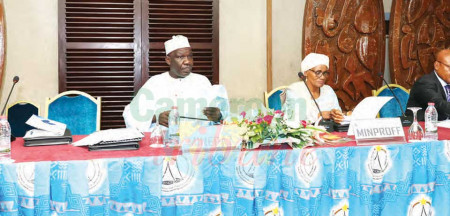
(Business in Cameroon) – Cameroon has mobilised 26 billion FCFA to eliminate hazardous chemical pollutants. The figures were presented at a project validation workshop held recently in Mbankomo in the Centre Region. The meeting was chaired by Professor Paul Tchawa, Secretary-General of the Ministry of the Environment, Nature Protection and Sustainable Development, MINEPDED. The funding package, attributed to the Government and the United Nations Environment Fund (GEF), advances national efforts to neutralise persistent organic pollutants in line with the Stockholm Convention, ratified on 26 May 2005.
GEF is contributing 10 million dollars, equivalent to 6 billion FCFA, while the Government’s counterpart funding amounts to 30 million dollars, or around 20 billion FCFA. These details were disclosed during the validation of the project document titled “Phasing Out of PCB and Elimination in Cameroon”, which outlines the operational framework required for full implementation.
Participants at the Mbankomo workshop examined the project’s logical framework and operational mechanisms. The initiative involves developing a national action plan or sectoral action plan to support the implementation programme. This approach is intended to enable the identification, characterisation, and management of chemical discharges and to facilitate the application of related measures across targeted sectors.
According to project outlines presented during the session, Cameroon aims to eliminate 1,770 tonnes of hazardous waste and reduce 312 metric tonnes of carbon dioxide equivalent emissions. The project also seeks to strengthen regulatory provisions governing chemical pollutants, complete the inventory of transformers contaminated with polychlorinated biphenyls (PCBs), and replace and eliminate affected equipment in conformity with the Stockholm Convention requirements.
The “Phasing Out of PCB Use and its Elimination in Cameroon” programme is scheduled to run for five years. GEF finances it with additional financial assistance from the World Bank and technical support from national experts. The Stockholm Convention prohibits several highly persistent chemical substances, including aldrin, chlordane, dieldrin, and endrin, which were among the first twelve chemicals identified for global restriction.
The initiative presented in Mbankomo aligns national policies with international chemical safety commitments and provides the framework for managing and disposing of toxic industrial waste generated by various operators. The project document validation marks a key procedural stage before the transition to field execution, as MINEPDED indicated during the workshop.
Mercy Fosoh
