



























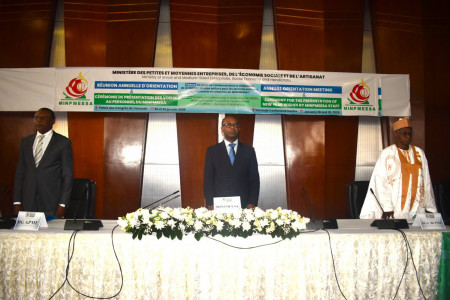
The Cameroonian government has launched consultations to strengthen the artisan sector’s contribution to gross domestic product (GDP) as part of its 2026 economic agenda. The initiative was announced on 28 January in Yaounde during the annual orientation meeting of the Ministry of Small and Medium-Sized Enterprises, Social Economy and Handicrafts (MINPMEESA) ‘s central and decentralised services.
The two-day meeting, chaired by Minister Achille Bassilekin III, is held under the theme “The place of handicrafts in the achievement of the SND30: state of play and prospects”. It seeks to align the development of the artisan sector with the objectives of Cameroon’s National Development Strategy 2020–2030 (SND30).
According to figures presented at the opening ceremony, the artisan sector currently accounts for about 5% of national GDP. Authorities believe this share could rise significantly if key structural constraints are addressed, notably intense foreign competition, a high level of informality, limited competitiveness, and restricted access to financing.
A keynote presentation by Mireille Menanga Epse Abongo, Technical Adviser No.1 at MINPMEESA, highlighted the sector’s economic potential across artisanal production, services and art crafts. The ministry also announced that the ninth edition of the International Handicrafts Fair of Cameroon (SIARC) will be held from 27 July to 5 August 2026, positioning the event as a major commercial and promotional platform for local production within the national economic calendar.
Government focus on structuring and growth
Addressing participants, Minister Achille Bassilekin III said the consultations aim to establish an accurate assessment of the sector and identify ways to mobilise it more effectively in support of SND30 growth targets. He noted that in several countries, handicrafts have become leading industries through structured production systems and service activities that generate substantial value added.
According to the minister, Cameroon’s artisan sector remains underexploited. The 2026–2028 strategic framework therefore places renewed emphasis on improving organisation, productivity and market orientation. Priority actions, he said, will focus on reducing structural inefficiencies and increasing the sector’s measurable economic output.
Beyond output growth, the government sees employment creation and local wealth generation as key outcomes of reforms in the artisan sector. The consultations bring together decentralised state services, local authorities, artisan villages, professional organisations, technical and financial partners, and private sector stakeholders.
Workshops and technical sessions are focusing on clarifying institutional roles, defining viable economic models, accelerating digitalisation, and strengthening local value chains. Within the SND30 framework, the artisan sector is being positioned as a driver of inclusive growth, with increased formalisation, improved access to markets, and stronger integration into national branding initiatives under the “Made in Cameroon” label.
Mercy Fosoh
