

























(Business in Cameroon) – Cameroon’s Supreme Court Audit Chamber has published its review of the management of the Garoua Urban Community (CUG) from 2020 to 2024. While the financial body praised the CUG’s urban cleanliness efforts—which earned the northern regional capital the title of cleanest municipality in 2023—the report highlights numerous severe deficiencies.
The report, obtained by Business in Cameroon, found that the CUG’s budget and accounting management remain highly flawed. The Audit Chamber emphasized that “all budgets are voted late and appear insincere, with revenues and expenditures systematically overvalued.” Between 2020 and 2024, the execution rate for revenues hovered between 61% and 66%, while the expenditure rate fluctuated between a meager 40% and 52%.
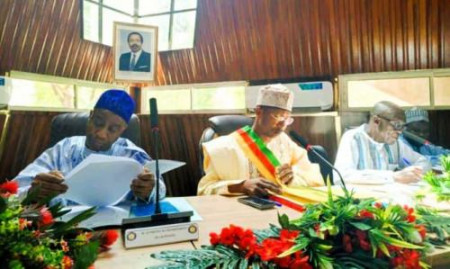
The chamber also criticized the irregularity of urban community sessions, noting they were held in violation of the General Code of Decentralized Territorial Collectivities (CTD). The report reveals that only in 2020 was at least one session held per quarter. Even when sessions did occur, their convocations were generally late, “negatively impacting the quality of the debates.“
Unqualified Commissions and Ineffective Internal Control
The audit found that the five commissions established within the CUG suffer from a “lack of technical qualification” among their members. “In practice, the work essentially rests on a handful of members, even though the General Code of CTD authorizes the use of external expertise,” the chamber noted. It added that CUG officials have never utilized this option, despite being aware of the low quality of their grand councilors and commission members, attributing the issue to political contingencies.
Regarding internal inspection, which is meant to control and evaluate the community’s activities, the function is described as nearly nonexistent. The system requires two inspector positions—one for technical works and one for administration and finance. However, only the inspector for administration and finance was appointed, and this individual simultaneously serves as the Mayor’s private secretary. This dual role “prevents him from dedicating himself to the inspection task,” with the Chamber insisting that “the inspection function is autonomous and must not under any circumstances be combined with another role.“
A further irregularity is the massive reliance on temporary staff. On average, 240 so-called “temporary” agents were renewed quarter after quarter, which is more than double the permanent workforce. The report indicated this shows a real need for personnel, noting that some temporary staff were also receiving a “salary lower than that stipulated in their contract.”
Underutilized and Non-Revenue Generating Assets
The Audit Chamber also observed that several CUG infrastructures generate no income despite the financial costs they incur. Examples include shops provided to the University of Garoua and a festival hall constructed with a loan from Feicom, which is still being repaid, but is currently occupied by the North Regional Council.
The report also cited the failure to collect certain port duties during the review period because the local prefect had not approved the resolution instituting the taxes. This blockage was finally lifted after a request for information from the CUG allowed the National Port Authority (APN) to homologate the tariffs.
In response to these lapses, the Audit Chamber issued nine recommendations. It urged the community executive to comply with legal provisions regarding the regular scheduling and holding of sessions, and suggested implementing subsidiary accounting to transparently track revenues from electricity bill payments.
The report also recommended transferring the abattoir to the appropriate local district council and signing a formal lease agreement between the CUG and the North Regional Council for the occupation of the festival hall. Finally, the financial jurisdiction stressed the need to monetize the Garoua river port, which is considered a major but currently underutilized economic asset.
Amina Malloum
