

























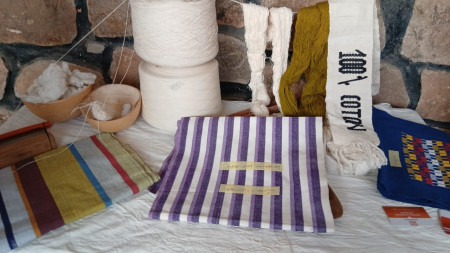
Cameroon’s cotton value chain is receiving a local transformation boost as the Gaaraadji Training and Weaving Centre in Garoua strengthens efforts to convert raw fibre into finished textile products while improving women’s incomes in the North Region. Created in 2024, the centre provides training in modern artisanal weaving, targeting primarily young women seeking professional integration.
The initiative links skills development with the promotion of locally produced cotton, positioning textile transformation as a source of income generation and rural industrial activity. According to the Food and Agriculture Organization, cotton contributes significantly to rural employment in the northern regions, where the bulk of production is concentrated. While most cotton is traditionally exported after primary processing, government policy has increasingly emphasised local transformation to retain more value within the domestic economy.
The government’s National Development Strategy, NDS30, aims to boost cotton production to 600,000 tonnes annually by 2030 and ensure that 50 per cent of output is processed domestically, up from the current 5 per cent transformed by the Cameroon Cotton Industry. The Bank of Central African States, BEAC, had projected national production will reach 350,100 tonnes in 2025, up from 340,000 tonnes in 2024.
The Cotton Development Company, SODECOTON, has revealed that it is working towards a long-term goal of 400,000 tonnes annually. According to the World Bank, the sector supports hundreds of thousands of rural producers directly and indirectly through farming, transport and processing activities. The Gaaraadji centre aligns with this objective by training weavers capable of converting cotton yarn into finished fabrics and garments.
The centre currently has 10 learners, 70 per cent of whom are women. All were previously without income. According to the management, the first cohort has acquired weaving skills enabling them to generate estimated monthly earnings ranging from CFA50,000 to CFA150,000 from their craft activities.
The centre’s promoter, Sanda Ayatou, stated that the project aims to increase its training capacity fivefold and establish a cooperative of 150 women weavers by 2027. The objective is to strengthen local cotton processing while creating structured income opportunities for women in the region.
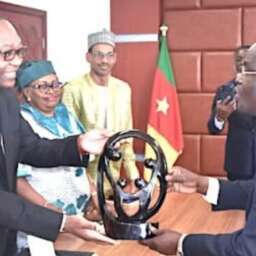
Recently, the centre received a visit from Marie Pierre Raky Chaupin, Resident Representative of UN Women Cameroon. Discussions during the visit focused on potential partnerships in vocational training and the professional integration of vulnerable young women to enhance their economic resilience.
The centre’s approach combines vocational training, cooperative development and local transformation, linking agricultural output to small-scale manufacturing. As cotton production continues to underpin rural economies in the North, efforts to develop downstream activities are positioning textile crafts as a complementary source of employment and income within the broader agricultural value chain.
Mercy Fosoh
