
































(Business in Cameroon) – Wagas Group signed an MoU with Cameroon’s government to build 1.5 million homes by 2035.
- The project will rely on green bonds and sustainable financing mechanisms — a first in the Cemac region.
- A pilot phase in Ebolowa will begin with 30,000 to 50,000 homes on 24,000 hectares.
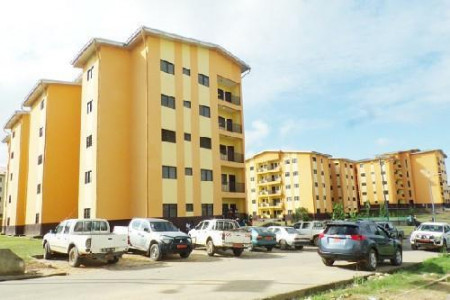
French infrastructure group Wagas plans to build 1.5 million housing units in Cameroon by 2035, under a memorandum of understanding signed on September 16, 2025, with the country’s Minister of Housing and Urban Development Célestine Ketcha Courtès. The company did not disclose the total project cost.
Wagas CEO Jonathan Partouche said the project will involve Chinese construction partners with strong housing expertise. He noted that the financing will rely on green funds and bond markets, a model still rare in the Central African Economic and Monetary Community (Cemac), which includes Cameroon, Gabon, Congo, Central African Republic, Chad, and Equatorial Guinea.
“It is an innovative financing model that guarantees the sustainability of the investment,” Partouche said.
Green bonds have emerged as a growing mechanism in Central Africa’s capital markets. Recently, Africa Bright Securities successfully issued CFA20 billion ($32 million) in green bonds for Façade Maritime du Champ Triomphal (FMCT) in Gabon, with a five-year maturity and an annual gross interest rate of 7.5%, including two years of principal deferment.
Wagas’s use of green bonds aligns with the Cemac heads of state’s 2021 resolution promoting environmental policies and financing to tackle climate change.
The pilot phase of the project will start in Ebolowa, southern Cameroon, where 24,000 hectares have been allocated by the Regional Council for the construction of 30,000 to 50,000 homes.
Minister Ketcha Courtès said a steering committee will oversee the project, evaluating the business plan and validating the implementation schedule.
Wagas brings experience from Nigeria, where it claims to have helped develop over 20 million housing units. In Cameroon, the project aims to reduce the country’s 2.5 million housing deficit, complementing ongoing government initiatives to expand affordable housing.
This article was initially published in French by Frédéric Nonos
Adapted in English by Ange Jason Quenum
