
































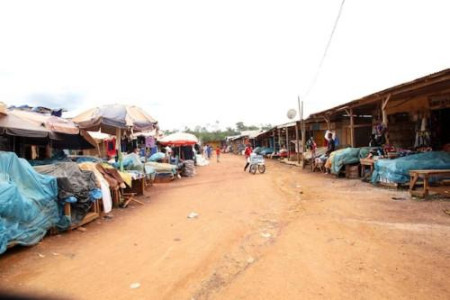
Informal cross-border traders at the three-border zone linking Cameroon, Gabon, and Equatorial Guinea—especially around the trading hub of Kye-Ossi—continue to face significant administrative and financial obstacles. This is the finding of a report by the United Nations Economic Commission for Africa (ECA) titled “Characterization of Informal Cross-Border Trade in Central Africa: The Case of the Cameroon–Gabon–Equatorial Guinea Three-Border Zone.”
According to the study, many of these challenges stem from traders’ interactions with authorities stationed at border posts. The report cites customs officials, police, gendarmerie, and several sector agencies responsible for inspecting goods, including departments overseeing agriculture, livestock, commerce, and forestry. While these constraints affect most traders, the report notes that women—who make up a large share of participants in this segment of regional trade—bear the heaviest burden.
Arbitrary charges and missing receipts
Among the main issues identified are those tied to customs procedures. Nearly all respondents said customs clearance costs are too high, discouraging many operators from formally declaring their transactions. Faced with these expenses, some traders choose informal routes to move their goods across borders.
The report also points to what traders describe as arbitrary charges, often collected without official receipts. About 83% of respondents reported this practice. The document notes that such situations “highlight the risk of embezzlement or loss of customs revenue, since any declaration or payment made to customs services should result in the issuance of a receipt.”
Beyond cost concerns, slow customs procedures are another major obstacle. Around 78% of surveyed traders cited delays in clearance. This is particularly damaging for transporters handling perishable goods, especially food products that must reach markets quickly.
Corruption is another widely reported problem. About 56% of operators said some officials demand informal payments to speed up the movement of goods. Traders also reported administrative harassment, cited by 48% of respondents, which they say often involves hostile or dismissive behavior from border officials and rigid enforcement of procedures.
Persistent gaps in oversight
These findings raise broader questions about the functioning of Cameroon’s customs administration, which is responsible for implementing key elements of government policy. Its duties include collecting tax revenue, supporting economic activity, and protecting national territory.
To carry out these tasks, customs maintains operational units at major border crossings. In Kye-Ossi, customs services are deployed at the area’s three main crossing points. The local main customs office is also connected to CAMCIS, the computerized customs system designed to record declared transactions.
The gap between this formal structure and the practices reported by traders suggests persistent weaknesses in the oversight and management of cross-border trade in the region.
Amina Malloum
