
























Cameroon’s Cocoa and Coffee Development Fund (FODECC) has officially launched its 2025 subsidy campaign, mobilising FCFA 4 billion (£5.2 million) to support farmers and strengthen value-chain development. The programme comes amid expanding coffee and cocoa activities and growing global demand for high-quality beans, with a focus on boosting on-farm productivity and downstream investment.
Of the total envelope, 40 per cent (FCFA 1.6 billion) has been allocated to coffee and 60 per cent (FCFA 2.4 billion) to cocoa, reflecting increased support needs among coffee producers. FODECC said the subsidies are financed by the Central African Forest Initiative (CAFI), with disbursements currently being finalised following technical adjustments to the systems supporting the various producer windows. Representatives from the International Fund for Agricultural Development (IFAD), the Caisse Autonome and the PAIDATA project will have direct access to progress reports, reinforcing oversight and transparency.
Producer registration and order placement are being conducted on a “first come, first served” basis. As of 26 January 2026, just over 1 per cent of the total envelope had been committed. Women currently represent 37 per cent of beneficiaries, in line with equity targets set under the producer windows.
Despite a generally dynamic start, FODECC noted that producers in several regions are encountering registration difficulties in so-called “black zones”, where partner agro-dealers and financial intermediaries such as banks are scarce. Affected areas include Nyong and Mfoumou in the Centre region, much of the Grand Sud, parts of the West, Meme and Lebialem in the South-West, Menchum and Bui in the North-West, as well as the East region. In response, FODECC has intensified awareness campaigns to boost participation in these localities.
The producer window at the core of the subsidy mechanism, introduced in 2021, links farmers with partner financial institutions. Under the scheme, producers contribute 60 per cent of project costs, while subsidies covering 30 to 40 per cent of the remaining balance are provided through vouchers for inputs, improved seedlings, crop protection products, machinery and supporting infrastructure.
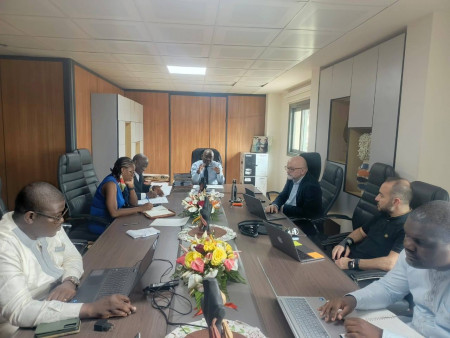
Speaking at the campaign’s launch on 26 January, FODECC’s Administrator outlined the programme’s structure and expected outcomes. Officials from partner organisations were invited to monitor implementation, ensure compliance with procedures and support the effective roll-out of resources to eligible producers.
Coffee and cocoa remain pillars of Cameroon’s agricultural economy, generating substantial export revenues and rural incomes. Coffee marketings rose by 9.86 per cent to 11,637 tonnes during the 2024-2025 campaign, while producer prices increased to FCFA 2,854/kg for arabica and FCFA 1,959/kg for robusta.
Cocoa output also remained strong, exceeding 309,000 tonnes in the 2024-2025 season. Local processing volumes surpassed 109,000 tonnes for the first time, underscoring the growing emphasis on domestic value addition. Strengthening the value chain—from farm-level input support to processing—has become a priority as Cameroon seeks to capture more value locally rather than exporting raw beans.
Overall, the subsidy campaign aligns with broader objectives to widen producer participation, raise yields and better integrate smallholders into higher-value segments of the cocoa and coffee industries.
Mercy Fosoh
