




























By Hans Ngala
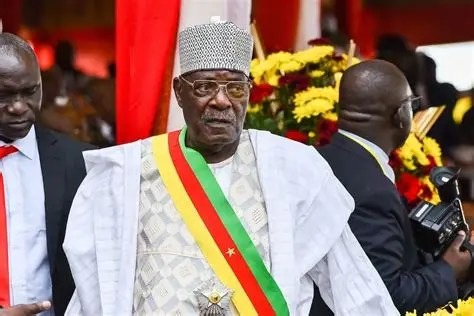
For the first time in our national life, we are seeing power change hands. While it is still the same party and likely the same policies, there is a glimmer of hope. Cavayé Yéguié Djibril is out, and for many Cameroonians, that’s all that matters. This moment holds a personal resonance for me. I was just three months old in March 1992 when Cavayé first took over as president of the National Assembly. He himself was 53 already – slightly on the older side but certainly not as old as his current age.
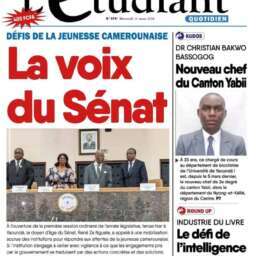
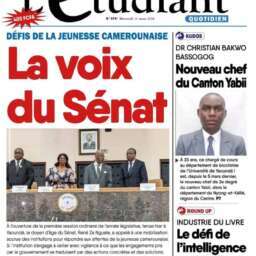
Cavaye’s ousting comes barely five months after a contested election, which saw Issa Tchiroma Bakary, Cavaye’s own former colleague and contemporary, claim victory. Many Cameroonians (and certainly many Anglophones) had hoped that Tchiroma would be an alternative to the incumbent ruler. Their hopes were dashed when Biya refused to budge and strengthened his grip on power instead. That is why this moment – even if not as powerful as the office of president – still resonates with a lot of Cameroonians. It shows them that change is possible even after decades. Most of those Cameroonians (like myself I’d suspect) were born after or shortly before Cavaye took over as National Assembly president and most of them are now in their mid-thirties or early forties. They have not known much change or progress and Hon. Datou’s ascension is therefore a welcome change.
The departure of Cavayé Yéguié Djibril, even within the same ruling establishment, carries symbolic weight that should not be underestimated. For decades, his presence embodied continuity to the point of stagnation, reinforcing the perception that political power in Cameroon is permanent rather than accountable. His exit signals, however modestly, that no position is entirely immune to change. In a country where a significant majority of the population is under 30, such a shift speaks to a growing disconnect between aging leaders and a youthful citizenry eager for representation, innovation, and responsiveness. Cavaye’s removal suggests that longevity in office is no longer an unquestioned guarantee of relevance. And in fact, if we are being honest, Cavaye lost touch with relevance and reality a long time ago. In November 2016 when the Eseka train derailment happened, Cameroonians took to social media to express their anger. However, Cavaye whose loyalty seems to be more to those above him than to the Cameroonians he ought to represent – was quick to label social media as “a new form of terrorism”. This showed the degree to which he was out of touch with the lived reality of Cameroon’s youthful population. Under his leadership, debates on the Anglophone Problem have remained taboo, even as he spearheads calls for national unity. Cavaye’s removal plants a psychological seed: that change, however incremental, is possible. And in Cameroon’s current political climate, that idea alone has the potential to reshape expectations and, eventually, outcomes. For Cameroonians, this is one less old, out-of-touch politician who is out of the political scene and this gives Cameroonians hope!
– Hans Ngala writes for CNA and edits its political and health sections
