















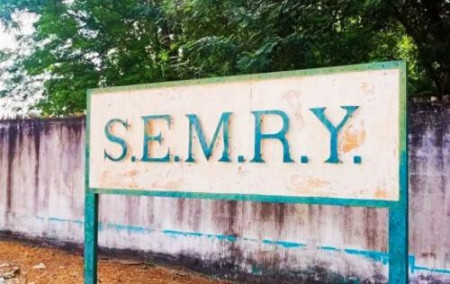
(Business in Cameroon) – The Yagoua Rice Expansion and Modernization Company (Semry) is continuing its assessment of the future of its industrial operations. From November 12 to 13, 2025, the state-owned company and the Council for Partnership Contract Support (Carpa/CARPA) held discussions focused on possible concession options for the Yagoua and Maga paddy processing plants.
Information obtained by Business in Cameroon shows that this is neither a capital opening nor a formal decision to outsource Semry’s industrial activities. The process remains exploratory. Its purpose is to determine whether the management of the two mills should be entrusted to a private operator or kept under internal control. “During the discussions between Semry and Carpa, issues related to the scope of tasks to be assigned to a private partner and the project’s level of maturity were examined,” Carpa said in a statement.
At the end of the meeting, both institutions agreed to prepare a detailed action plan to guide the final decision. This technical document will outline different scenarios and their expected economic impacts. A source familiar with the discussions said Semry mainly seeks “to identify the most effective model for modernizing paddy processing and improving the competitiveness of locally produced rice.” Although the concession option remains on the table, no decision is expected in the short term. If selected, the project would only enter the maturation phase in 2026, pending approval from the relevant authorities.
A structural deficit
This review comes as a broader restructuring of Semry is under consideration, aimed at strengthening national rice production and reducing Cameroun’s dependence on imports, which still amount to several hundred billion CFA each year.
A recent audit report from the Chamber of Accounts of the Supreme Court, covering 2018–2021, highlights the company’s critical financial condition. Despite being a profit-oriented public enterprise, Semry remains structurally loss-making and cannot cover the real cost of its agricultural services. “A company that cannot provide its clients with services whose production cost exceeds the selling price is necessarily destined to disappear,” the auditors warn.
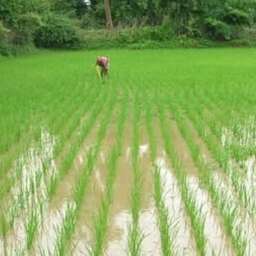
In 2021, Semry spent CFA2.8 billion on various agricultural services across 10,348 hectares in Yagoua and Maga, in the Far North region. These services include mechanized fieldwork, irrigation, maintenance of hydraulic infrastructure and farm roads, and seed production. The average cost reached CFA276,547 per hectare.
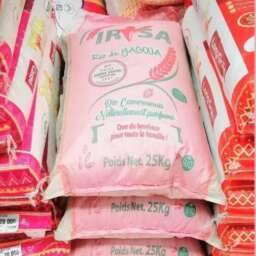
Producers, however, are charged a rice development fee capped at CFA102,000 per hectare. Even with the state subsidy of CFA40,588 per hectare, the net loss remains CFA133,959 per hectare, or roughly CFA1.3 billion for 10,000 hectares. The report also shows that Semry sells rice at a chronic loss: a kilogram of milled rice costs CFA743 to produce but is sold at CFA376. Even after adding the public subsidy of CFA131 per kilogram, each kilo still generates a loss of CFA236.
To avoid collapse, the Chamber of Accounts recommends a comprehensive restructuring of Semry’s operations, including ending certain costly services such as plowing and direct management of farmland.
Private concession or in-house management: key trade-offs
A concession awarded to a private operator would make it possible to bring in a player with stronger financial capacity, proven industrial expertise, and experience in modernizing processing chains. Such a model would also provide Semry with greater budget visibility and allow it to refocus on its agricultural and hydro-agricultural duties.
However, any transfer would require clear, contractually defined obligations for the concessionaire: processing volumes, purchase prices paid to farmers, equipment maintenance, and modernization of industrial assets. Ensuring stable supplies of local rice and maintaining affordable prices for farmers and the domestic market would be central to negotiations.
Keeping the mills under internal management would preserve complete control over the value chain and ensure close integration between production, irrigation, and processing. But this option would require major investment in the mills, which the company—structurally unprofitable and dependent on irregular state subsidies—cannot finance on its own.
Amina Malloum
