



























Cameroon’s hotel sector expanded sharply in 2024, with 1,450 classified accommodation facilities, up from 1,281 in 2022, according to the midterm evaluation report of the National Development Strategy 2020–2030 (SND-30). The supply remains highly concentrated geographically, with most establishments located in the Centre region (380) and the Littoral (310), followed by the West (230) and the South (125).
Total room capacity reached about 35,000, representing a 10 % increase compared with 2022. Capacity utilization also improved, with the average occupancy rate standing at 72 % in 2024, up 4 points over two years. The trend points to rising attractiveness of hospitality infrastructure as supply continues to expand and diversify.
Faster growth driven by diversification and promotion
Beyond capacity expansion, the accommodation and food services branch posted growth of 5.8 % in 2024, compared with 4.6 % in 2022, according to the same report. The increase is attributed to a more diversified tourism offering, improved service quality, and stronger promotion of Cameroon as a destination on both domestic and international markets.
Together, these factors are supporting investment momentum and higher occupancy rates, with potential spillover effects on employment in services, training, and local supply chains.
Luxury segment faces rising competition in Yaoundé
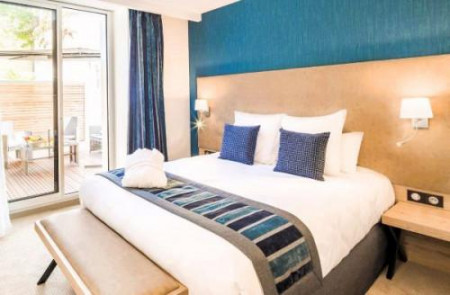
Within this broader expansion, the luxury hotel segment is gaining traction, particularly in major cities. In Yaoundé, competition is intensifying among established operators such as Hilton and Mont Fébé, now facing a new wave of projects.
Major developments cited include Radisson Serviced Apartments, with 220 units expected by 2026, the recently inaugurated Concord International Hotel, the Hotel du Lac—a 30-story hotel tower backed by Belgian group IIDG—and a Le Méridien project announced for the coming years. Investment per project is estimated at between CFA50 billion and CFA90 billion, highlighting the financial exposure required to move upmarket.
Douala follows suit on a higher-risk market
A similar trend is visible in Douala, where newer hotels coexist with long-standing players, including Krytal Palace, K Hotel, Sawa Hotel, and Akwa Palace. The upscale positioning brings profitability and service standardization challenges.
“Luxury hospitality is a capital-intensive and high-risk sector,” said a Douala-based consultant, pointing to the need for “a clear marketing strategy, efficient management, and staff meeting international standards.” The comment underscores that capacity expansion does not automatically translate into profitability, particularly in a segment where fixed costs and execution quality are key drivers of occupancy and reputation.
Government seeks to structure supply and partnerships
The government says it aims to strengthen the tourism offering and promote public-private partnerships to develop tourism, handicraft, and cultural services. Stated priorities also include better structuring of industry players, enforcement of hotel service standards, and public awareness of tourism culture, with the goal of sustainably boosting the country’s attractiveness.
Amina Malloum
