
















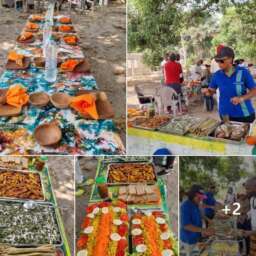



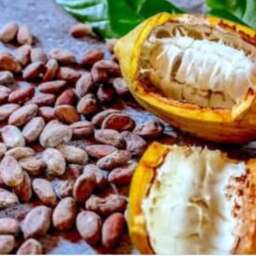



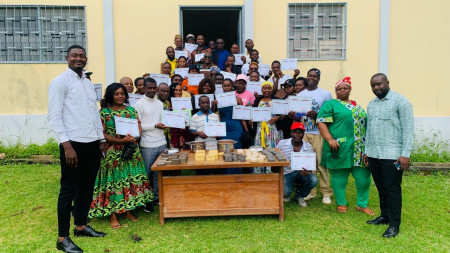
(Business in Cameroon) – The South regional delegation of the Chamber of Agriculture, Fisheries, Livestock and Forest Industries of Cameroon (CAPEF-South), in partnership with the National Employment Fund (FNE), has recently held a major training workshop in Sangmélima on transforming cocoa into chocolate and other derivative products. The recent workshop brought together 53 participants, cocoa producers, and other actors in the agricultural sector to equip them with practical skills for producing value-added cocoa products such as chocolate paste, cocoa-based soap, cocoa butter, and other derivatives.
According to the organisers, the training is part of a broader drive aligned with Cameroon’s import-substitution strategy. Its main objectives include adding value to locally produced cocoa, diversifying products on the domestic market, reducing post-harvest losses, fostering entrepreneurial capacity among producers, and reinforcing the cocoa value chain through the creation of high-value finished products. During the sessions, participants benefited from practical demonstrations and technical supervision, learning to produce cocoa paste, cocoa pod-powder soap, cocoa shell-powder products, cocoa cake, and cocoa butter that meet market quality standards.
This capacity-building effort comes at a time of substantial advancement in Cameroon’s cocoa sector. According to recent data, Cameroon recorded a historic output of 309,518 tonnes of cocoa during the 2024-2025 season, up from 266,710 tonnes in the prior season, an increase of 42,808 tonnes, or approximately 13 per cent. Domestic processing also leapt significantly: the country processed 109,431 tonnes of cocoa beans in 2024-2025, up 27.7 per cent from 89,672 tonnes in 2023-2024.
The expansion in processing capacity reflects growing investment: several processing plants across the country have increased capacity, including facilities in Kribi, Douala, Kékem, and Mbankomo. The increased local processing, which accounts for around 35 per cent of the traceable supply in the 2024-2025 season, according to official figures, suggests that more of the value chain is being captured on-shore.
At the conclusion of the training in Sangmélima, participants expressed satisfaction with their newly acquired knowledge and pledged to organise themselves into a cooperative. This move aims to facilitate institutional support from CAPEF, enable resource pooling, and improve access to long-term financing. The initiative by CAPEF-South thus appears well-timed: with rising production, higher levels of domestic processing, and strong global demand for cocoa, efforts to build local processing capacity and diversify cocoa-derived products could help retain more value within Cameroon’s economy.
Mercy Fosoh
