































(Business in Cameroon) – In its 2026 draft budget submitted to the National Assembly on November 26, the government plans to raise the export tax on marble and clinker to 10%. These materials, which receive fiscal and customs incentives when used for local production, would be subject to a 10% levy on their ex-factory value when exported.
Maintained at 2% since 2020, the export tax on marble and clinker had not yet been aligned with the 10% rate imposed that same year on gold and diamond exports. By raising the levy to 10%, the state seeks to increase tax revenue. The measure also aims to encourage local processing and production to limit exports of raw materials considered strategic for the country’s cement industry.
According to the National Institute of Statistics (INS), Cameroon imported 2,411,855 tons of clinker in 2023, worth CFA87.7 billion. Import volumes continue to grow due to strong demand from cement producers, in a context of insufficient local clinker production.
This reliance on imports raises cement production costs and weighs on the trade balance. The government is therefore aligning its tax policy with a strategy to replace clinker imports through national production and technical alternatives such as using marble in cement formulations.
To reduce clinker imports, Cimencam, the local subsidiary of LafargeHolcim Maroc Afrique (55%), has introduced a new production technique that substitutes part of the clinker with marble powder. This innovation aims to reduce the use of a mostly imported raw material while adding value to a local resource.
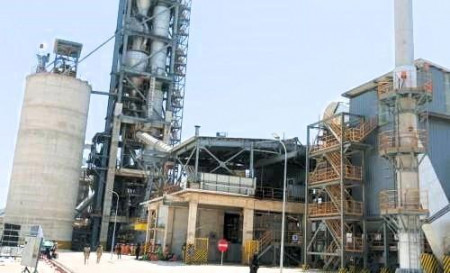
In June 2025, Cameroon launched local clinker production with the inauguration of the first dedicated plant in Figuil, in the North region. The CFA50 billion facility, operated by Cimencam, has a capacity of 1,000 tons of clinker per day and 500,000 tons of cement per year. The investment is part of a national industrial self-sufficiency strategy, aiming to reduce the country’s dependence on clinker imports and, ultimately, help lower the price of cement on the local market.
Frédéric Nonos
