




























Cameroon has launched a renewed push to strengthen the commercialisation of locally produced rice, as the country continues to face a structural imbalance between domestic production and consumption. Stakeholders met on March 31, 2026, in Yaounde under the leadership of Agriculture and Rural Development Minister Gabriel Mbairobe to address distribution bottlenecks and reduce reliance on imports.
The high-level discussions, organised by the Agricultural Value Chain Development Support Project Phase II (PADFA II), come as imported rice continues to dominate retail shelves despite existing local supply networks. In 2024, the country produced more than 52,000 tonnes of paddy rice, yet spent approximately CFA320 billion on imports, largely sourced from Asian markets. With annual per capita consumption estimated at around 25 kg, demand continues to significantly outstrip local supply.
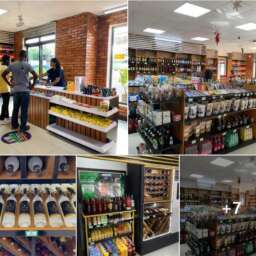
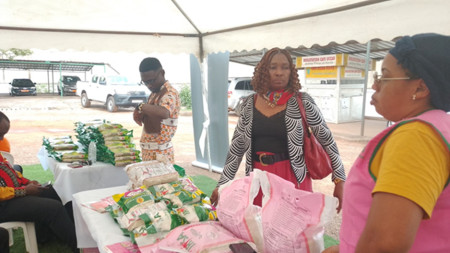
Stakeholders identified several constraints limiting the market penetration of “made in Cameroon” rice, despite the presence of distribution networks, including about 60 retail outlets in Yaounde alone. Weak market linkages, limited promotion, and pricing challenges were cited as key barriers.
Participants, including producers, traders, consumers, and public authorities, emphasised the need to improve coordination across the value chain. PADFA II outlined priority areas such as strengthening distribution channels, enhancing product visibility, and improving cost competitiveness.
“Cameroon is a rice producer. In every region of the country, we have significant production capacities. Unfortunately, this rice is not given sufficient value. According to statistics, we import rice worth more than 300 billion CFA francs every year. How can we explain the fact that we produce substantial quantities of rice yet import considerably more?” said Martin Paul Mindjos Noumeni, President of the Chamber of Agriculture, Fisheries, Livestock and Forestry.
Beyond market constraints, producers highlighted operational challenges affecting output, particularly in regions such as the Far North, where climate variability continues to impact yields. Irregular rainfall, high temperatures, and water management constraints remain significant barriers to production stability.
“The challenges facing rice producers in the Far North of Cameroon are linked to the scarcity of rainfall, heat and water management. Locally produced rice is being passed over in favour of imported rice, which people describe as easy to cook,” said Julienne Djakao, rice producer and processor.
Despite these constraints, stakeholders reported early signs of changing consumer behaviour, supported by awareness campaigns and improved perceptions of local rice quality. “It is encouraging to see that awareness-raising efforts in our communities are beginning to bear fruit,” Djakao added.
Authorities also acknowledged that current supply levels remain well below national targets. In 2020, domestic rice supply stood at 140,710 tonnes against an estimated demand of 577,000 tonnes. Government projections aim to increase production to 460,000 tonnes by 2027 and 750,000 tonnes by 2030.
“All government projects put in place over several years have already swallowed up 1,000 billion CFA francs for a production increase of less than 100,000 tonnes of milled rice,” Mbairobe said.
The rice value chain supports thousands of households, making its development a priority within the broader agricultural transformation agenda. The Yaounde consultations are expected to define coordinated actions aimed at improving competitiveness, including better communication strategies and targeted interventions across the supply chain.
Stakeholders agreed on the need for a coordinated approach combining production scaling, distribution efficiency, and consumer awareness to gradually reduce the dominance of imports.
Mercy Fosoh
