
































(Business in Cameroon) – Cameroon’s 2026 Finance Law sharply increases excise duties on older imported vehicles, introducing a progressive scale meant to widen the tax base and strengthen public revenue while steering buyers toward newer and electric models. But renewing a fleet with an average age of 18 years will also depend on deeper reforms in taxation, industrial policy, and household income.
The law sets a 12.5 % rate for vehicles between 12 and 20 years old and 25 % for those older than 20 years, covering all categories including passenger cars, utility vehicles, buses, and trailers. Previously, vehicles from 0 to 15 years were taxed at a flat 12.5 %, while those 20 years and older were subject to the 25 % rate.
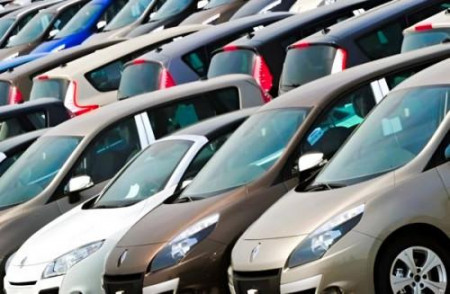
By increasing excise duties on the oldest vehicles, the government seeks to expand its tax base and curb the appeal of very old imports. The shift comes as the circulating fleet averages 18 years of age, according to the General Directorate of Customs. The agency estimates that Cameroon had between 1.6 million and 2 million used vehicles in 2023, more than 92 % of them older than 15 years.
Incentives for Newer and Electric Vehicles
To encourage the purchase of newer vehicles, the government used the Economic Partnership Agreement with the European Union in 2019 to eliminate customs duties on imports of vehicles less than ten years old. The move was intended to make newer models more competitive against older cars, which cost less upfront but require more maintenance and fuel.
Since 2025, the state has also waived excise duties on imported electric vehicles. For a 24-month period, it introduced a 50 % reduction on the taxable value of new electric vehicles and motorcycles, as well as their batteries and charging stations. The goal is to promote the adoption of cleaner electric models over more polluting combustion vehicles and support environmental protection efforts.
Despite these incentives and the strong presence of car dealers, imports of relatively old vehicles continue to dominate the national market. Their value rose 12 % between 2021 and 2024, reaching CFA105.7 billion, according to the National Institute of Statistics.
Beyond fiscal and tariff measures, sustainably renewing Cameroon’s vehicle fleet will require broader policy and economic reforms. These include creating a more attractive tax system to support the emergence of a local automotive industry, training a skilled workforce to operate it, and strengthening purchasing power so that consumers can afford new vehicles.
Frédéric Nonos
