































Starting January 20, several cities in Cameroon’s Adamawa, North, and Far North regions will face electricity cuts lasting several hours, according to a load-shedding schedule released by Eneo Cameroon.
In the Adamawa region, some neighborhoods in Ngaoundéré will be without electricity from 8 a.m. to 6 p.m. In other towns in the region, outages are scheduled either from midnight to 7 a.m. or from 6 p.m. to midnight.
A similar pattern has been announced in the North region. In Garoua, the main city, electricity supply is set to be cut on January 20 from 8 a.m. to 6 p.m. Load shedding will also affect other localities, including Tcholliré, Figuil, Guider, Dembo, and Mayo Oulo.
In the Far North region, Eneo plans power cuts in Maroua, Bogo, Maga, Kaélé, Yagoua, Kousséri, and Mora. The schedule covers all cities in the region, with the notable exception of Mokolo.
Dry season hits production at Lagdo
Eneo links the rationing to production and grid constraints. In a statement dated January 16, the utility said that “with the return of the dry season, the national power system is facing severe constraints affecting the continuity of electricity supply in several localities of the Southern Interconnected Grid and the Northern Interconnected Grid.”
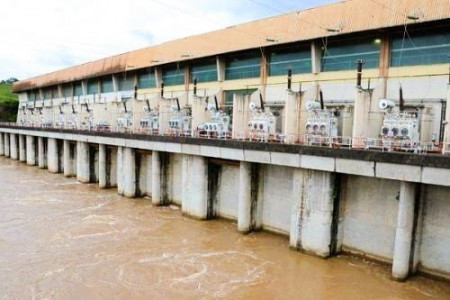
The three northern regions depend on the Northern Interconnected Grid, whose main facility is the Lagdo hydropower dam on the Benue River. According to Eneo, rainfall recorded in 2025 in the Benue basin feeding Lagdo “did not allow for optimal reservoir filling,” leading to lower output from the plant. The situation has been “worsened by a severe low-water period in the Lagdo catchment area.”
Grid saturation and limited thermal backup
Beyond hydrological constraints, Eneo points to structural issues, including the saturation of some transmission infrastructure and the vulnerability of parts of the distribution network. As a result, the company said it was forced to “implement load shedding across the entire Northern Interconnected Grid.”
To offset hydropower variability, the grid relies on six thermal power plants used as backup. However, Eneo said their total capacity is limited to 72 MW and heavily dependent on fuel supply. The utility cited “financial difficulties affecting fuel procurement,” reducing its ability to respond during periods of tight supply.
Eneo added that these challenges are not confined to the north. In southern Cameroon, concerns also focus on low water levels, particularly in the Sanaga basin, which hosts three hydropower dams, and in the Ntem basin, where the Memve’ele plant is located.
Ludovic Amara
